
EV Battery Insulation & Thermal Runaway Fire Barriers
Wedge Industries Limited manufactures EV battery insulation pads, cell-to-cell fire barriers, compression pads, thermal interface pads and gap fillers in India for electric-vehicle and BESS battery packs. Aerogel, mica, ceramic-fibre and intumescent materials rated to 650–1,260 °C, die-cut to your drawing.
Browse all 300+ EV battery thermal and fire protection products
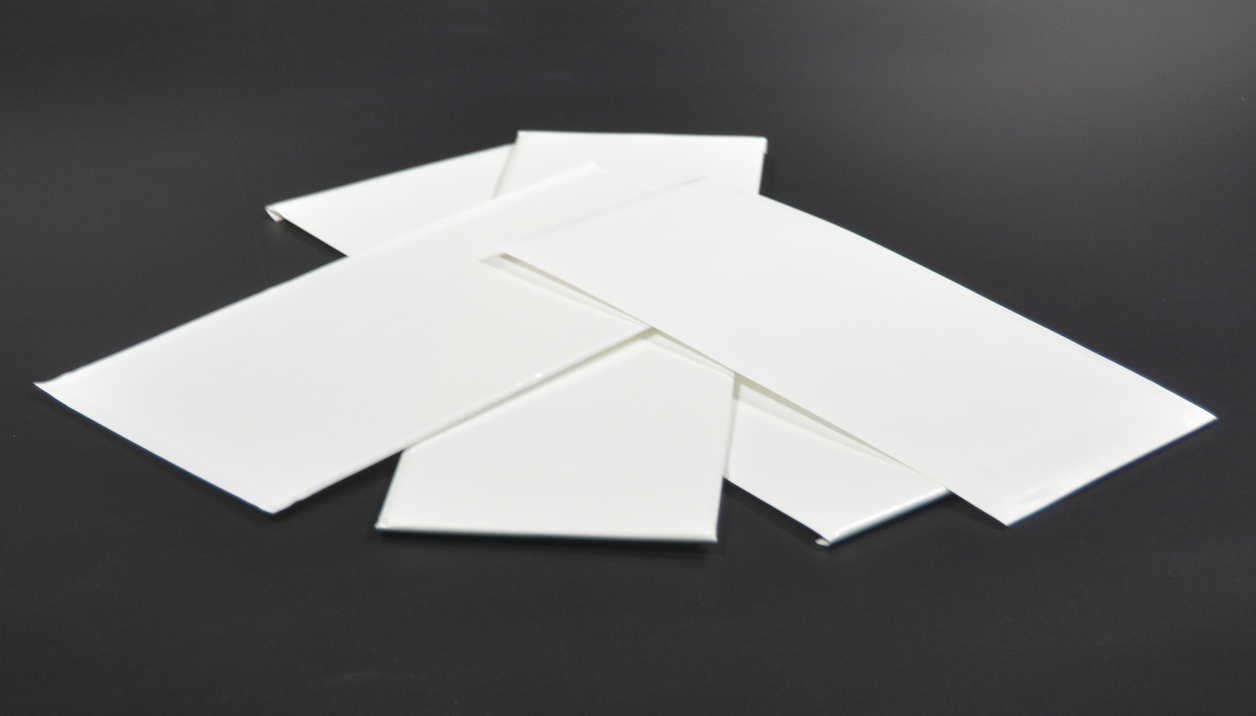
What is EV battery insulation and why does it matter?
EV battery insulation is the set of thermal and fire-barrier materials placed between cells, between modules and around the pack that slow heat transfer, absorb swelling and stop a single-cell thermal runaway from propagating. A lithium-ion cell in runaway can exceed 800 °C within seconds; the neighbouring cells must be held below their trigger temperature long enough for the vehicle to be evacuated and the fault contained. Regulators now test for this directly — India’s AIS-156 Amendment 3 for two- and three-wheelers, and UL 2596 and GB 38031 type tests for pack-level thermal runaway propagation — so the material stack is a compliance item, not an accessory.
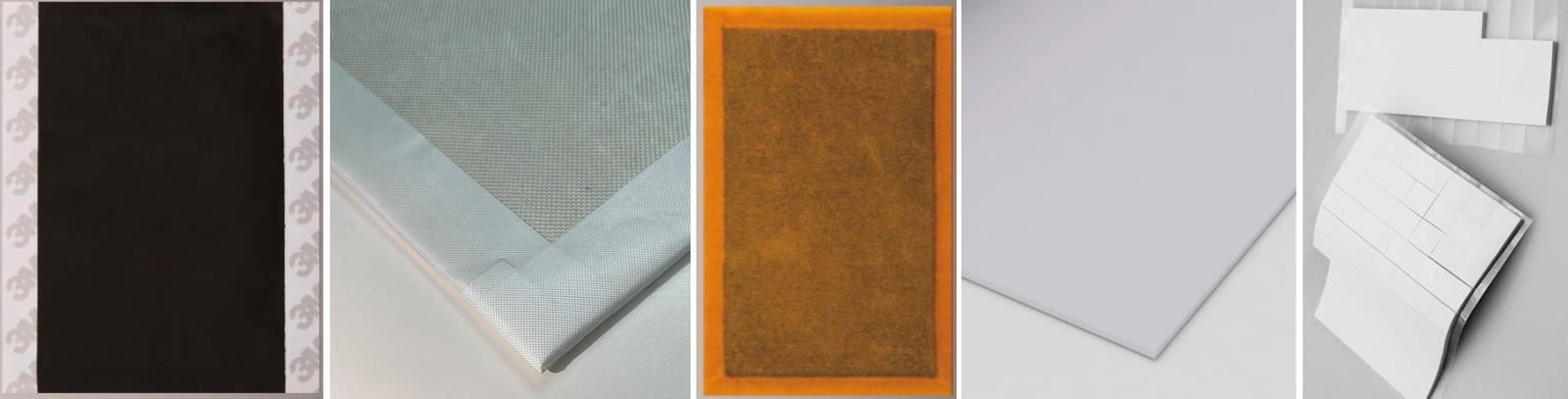
EV battery insulation and fire barrier materials we manufacture
| Product family | Material | Key rating | Where it goes in the pack |
|---|---|---|---|
| EV Battery Insulation Pad | High-density silica aerogel core, e-glass facing, PSA one side; 1–6 mm | 650 °C, designed for AIS-156 Amd-3 packs | Cell-to-cell and module-to-module thermal barrier |
| Fire Barrier MIC | Rigid phlogopite mica laminate; 0.5–5 mm | UL 94 V-0, 1,000 °C | Module lid, pack lid, busbar and cell-top flame barrier |
| Fire Barrier AGF | Aerogel-fire composite blanket; 1–5 mm | UL 94 V-0, 1,200 °C | Flexible cell wrap and inter-module barrier |
| Fire Barrier INT | Intumescent sheet, expands 5–10×; 1–5 mm | UL 94 V-0, 2 h rating | Vent paths, pack seams, enclosure gaps |
| Fire Barrier CFB | Ceramic fibre board; 1–5 mm | 1,260 °C | Pack floor and side-wall lining, BESS racks |
| Mica Barrier Plate & Busbar Mica Sheet | Die-cut phlogopite mica | High-temperature dielectric | Busbar isolation, cell-top and terminal covers |
| Silicone & PU Foam Compression Pads | Closed-cell silicone or PU foam, soft/medium/firm; 1–10 mm | CFD 20–150 kPa, −40 to +180 °C | Between pouch/prismatic cells to absorb swelling |
| Thermal Interface Pads | Ceramic-filled silicone elastomer; 1.0–8.0 W/m·K, 0.5–5 mm | Shore 00 40–70, −40 to +200 °C | Cell/module to cooling plate |
| Liquid Gap Fillers | Two-part dispensable silicone; 1.0–6.0 W/m·K | Room-temperature or heat cure, −40 to +200 °C | Module base to cold plate, uneven gaps |
| Thermally Conductive Tape | Ceramic-filled acrylic PSA; 1.0–2.0 W/m·K, 0.2–0.25 mm | −40 to +150 °C | Sensor, BMS and busbar heat paths |
| Graphite Heat-Spreader Sheets | Natural or synthetic graphite film; 0.025–1 mm | 400–1,500 W/m·K in-plane, 400 °C | Hot-spot spreading under cells and electronics |
| Heat Shields AGX / ALG / MPR / SSF | Aerogel, aluminised glass, microporous, stainless | Up to 650 °C (AGX) | Pack exterior, exhaust and charger enclosures |
| Dielectric Films & EMI Gaskets | Polyimide, PET, PP Formex, Nomex, polycarbonate; conductive fabric and foam | Electrical isolation / shielding | Cell wraps, busbar covers, BMS enclosures |
Values are family-level ratings taken from the individual product pages; each part is supplied with its technical data sheet. Every family is die-cut, kiss-cut or laminated to your DXF, with or without pressure-sensitive adhesive.
How to choose EV battery insulation for your pack
Stop propagation between cells
Use a 1–3 mm aerogel insulation pad or AGF composite between prismatic or pouch cells; add a compression pad where cell swelling must be absorbed over life.
Contain flame and hot gas at the lid
Rigid mica barrier plate under the module or pack lid, intumescent INT sheet at seams and vent paths, and mica busbar sheets over terminals.
Move heat to the cooling plate
Thermal pads for flat, repeatable gaps; liquid gap filler for uneven or large-area gaps; graphite sheets where a thin heat spreader is needed.
Send us the cell format, pack layout and target propagation time and a Wedge engineer will propose a material stack with thicknesses. For BESS containers and stationary storage, the same families are supplied in rack and container sizes.
Applications
Electric cars, buses and trucks
Battery energy storage systems (BESS)
Data-centre and UPS battery rooms
Battery swapping and charging cabinets
Aerogel insulation range
Passive fire protection range
Why OEMs and pack integrators buy EV battery insulation from Wedge
- Indian manufacturer, not an importer. Aerogel pads, mica barriers and ceramic materials are produced and converted in Faridabad, so prototype quantities ship in days and series parts are priced without import duty and freight.
- One supplier for the whole thermal stack. Insulation, fire barriers, compression pads, thermal interface materials, films and EMI parts from one catalogue, with matched data sheets.
- Die-cut to drawing. Kiss-cut on rolls, sheets or individual parts, with PSA on one or both sides, from 0.025 mm graphite to 10 mm aerogel shields.
- Export ready. Wedge Industries Limited ships to 45+ countries and supports UK and EU customers from its UK entity.
Get a price in 24 hours
Share the part drawing or cell dimensions, material family, thickness, quantity and delivery location. A priced offer with technical data sheets follows within one working day.
Frequently asked questions
What is the best insulation between EV battery cells?
For prismatic and pouch cells the usual choice is a 1–3 mm aerogel insulation pad (0.02 W/m·K class, 650 °C) or an aerogel-fire composite, often paired with a silicone foam compression pad to absorb swelling. Cylindrical packs more often use mica or ceramic-fibre sheets under the cell tops and intumescent sheet at vents.
Do your materials meet AIS-156 Amendment 3?
AIS-156 Amd-3 is a vehicle-level test of the complete battery pack, so no single material is certified to it. The EV Battery Insulation Pad range is designed with the thermal propagation requirement in mind; Wedge supplies technical data sheets and sample quantities so the OEM can run its own pack-level validation.
What thermal conductivity should a thermal interface pad have?
Most cell-to-cold-plate applications use 2.0–4.0 W/m·K silicone pads at 1–3 mm; 6.0–8.0 W/m·K is used where the gap is thin and heat flux is high. Where the gap varies across the module, a liquid gap filler gives better contact than a pad.
Can you die-cut parts to our drawing?
Yes. Send a DXF or PDF drawing. Parts are die-cut or kiss-cut with optional pressure-sensitive adhesive, supplied as sheets, rolls or individual pieces. Prototype quantities are available before tooling.
Do you supply battery energy storage (BESS) projects?
Yes. The same fire barrier, insulation and thermal interface families are supplied in rack and container sizes for stationary storage, UPS rooms and data-centre battery rooms.
How do I get a quotation?
Use the contact form, call +91 97175 06848 or WhatsApp the same number with the drawing, material, thickness and quantity. Priced offers with data sheets are sent within 24 hours on working days; prices exclude 18% GST.
Designing a safer battery pack? Start with the material stack
Cell format, pack layout, target propagation time — that is all we need to propose insulation, fire barrier and thermal interface materials with thicknesses and a price.