
Fire Door Test Consulting Services by Wedge
Fire door testing is expensive to fail. One full-scale furnace test costs ₹8–15 lakh ($9,100–17,000) and a 2–3 month wait for the next slot. Wedge Industries Limited helps door manufacturers pass first time — to IS 3614 / IS 17518 (Part 1), BS 476 Part 22 and BS EN 1634-1 — with specimen design, pilot panel tests, lab selection, build supervision, test witnessing and the BIS and NBCS 2026 paperwork that follows.
For wooden and steel fire door makers, OEMs and fit-out contractors · FD30 to FD240 · India, Gulf and export test routes · Uses Wedge-tested core boards and intumescent seals
What is fire door test consulting?
Fire door test consulting is technical support that gets a door manufacturer’s design through a fire resistance test and into certification. It covers choosing the right standard and rating, designing the test specimen, de-risking it with small pilot tests, booking an accredited lab, supervising the specimen build, witnessing the furnace test and turning the report into a BIS licence, approved-make listing or customer submittal.
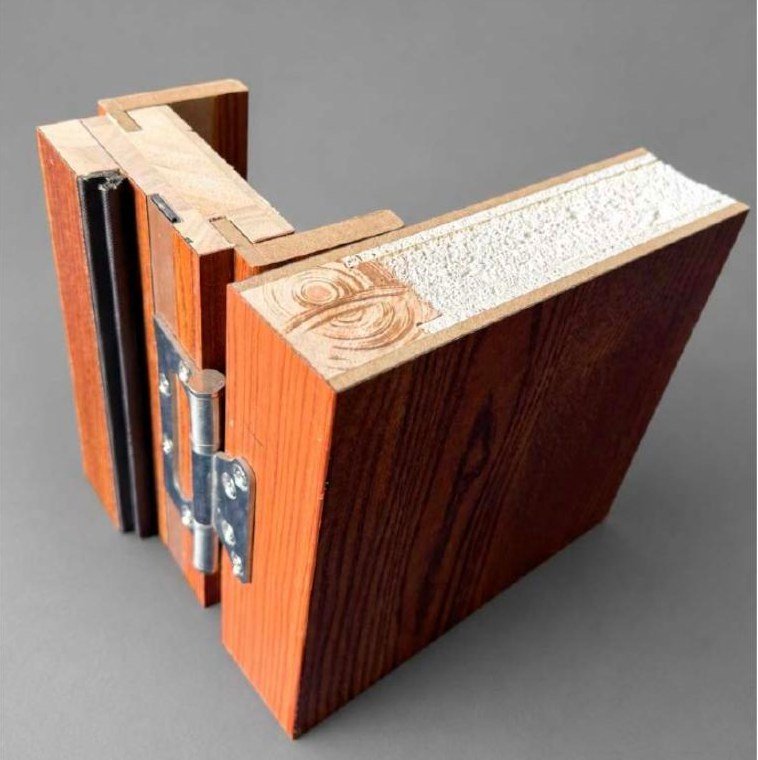
A fire rating belongs to the complete doorset that was tested — leaf, frame, core, seals, hinges, lock, glazing and gaps. Change one part and the report no longer covers the door. Most failed tests trace back to details decided before the specimen reached the lab: an under-sized intumescent strip, a hinge with no pad, damp timber, uninsulated glass or a gap outside tolerance. Wedge makes those components every day, so we know how each one behaves at 945 °C.
Why fire door testing matters now: NBCS 2026 and the BIS QCO
- NBCS 2026 (SP 7:2026) sets a 30-minute insulation floor for fire doors, expects certified doorsets from one accountable maker, and makes intumescent seals mandatory on exit doors. Staircases and exit routes typically call for FD60–FD120; basements and service rooms FD90–FD120. Read our NBCS 2026 passive fire protection guide.
- BIS Quality Control Order — the order issued on 08-07-2025 lists fire doors and doorsets to IS 3614:2021. BIS has not yet announced the enforcement date. Once it applies, fire doors sold in India will need the ISI mark, and the licence is granted per factory on the basis of a fire test of your own doorset.
- Buyers are asking for reports. Architects, fire officers and PMCs now ask for the lab report and its field of application, not a brochure line. Door makers without their own report lose tenders to those who have one.
Regulatory dates and requirements change. We re-check BIS and state fire authority positions at the start of every project.
Fire door test standards we work with
| Standard | Where it is used | What it measures | Notes |
|---|---|---|---|
| IS 3614:2021 with IS 17518 (Part 1):2022 test method | India — BIS ISI licence, NBCS 2026, CPWD and state PWD tenders | Integrity (E) and insulation (I), ISO 834 fire curve | Aligned with ISO 3008-1 and EN 1634-1. One doorset with frame and hardware per test; retest every 5 years or on design change. |
| BS 476 Part 22:1987 | Legacy Indian specifications, UK-referenced Gulf projects | Integrity and insulation, BS 476 Part 20 heating curve | Still named in many Indian door schedules and approved-make lists. Ratings shown as FD30, FD60, FD120. |
| BS EN 1634-1 with EN 13501-2 | UK, EU, UAE, Saudi Arabia, Qatar and other export markets | E, EI1 or EI2 classification; smoke control to EN 1634-3 | Needed when the same door is sold in India and the Gulf. Plan the specimen once for both routes where the lab allows. |
| UL 10C / NFPA 252 | USA and US-specified projects | Positive-pressure fire test and hose stream | Listing is issued by the certifying body; we help prepare the design package. |
What the furnace test looks for
Integrity (E)
No sustained flaming on the unexposed face for more than 10 seconds, no ignition of a cotton pad held at gaps, and no gap that a 6 mm gauge can pass along 150 mm or a 25 mm gauge can pass at all. Integrity usually fails at the leaf-to-frame gap, the meeting stiles, the hinges or the glazing bead.
Insulation (I)
The mean temperature rise on the unexposed face must stay at or below 140 °C, with no single point above 180 °C. Insulation usually fails at uninsulated vision glass, thin or poorly bonded cores, steel hardware that bridges the leaf, or the frame face.
Our fire door test consulting services
Test strategy and gap review
We review your current door range, target markets and tender requirements, then choose the standard, ratings and the fewest tests that cover your size range under the lab’s field-of-application rules. One test at the largest leaf size with a vision panel covers smaller and unglazed versions of the same design.
Specimen design and drawings
Leaf and frame build-ups, core and infill selection, intumescent seal positions, hinge and lock protection, glazing and gap tolerances — issued as controlled drawings and a bill of materials. What is tested is exactly what you must build afterwards, so the design has to suit your factory.
Pilot panel tests
Small-scale indicative tests on about 1 × 1 m panels (typically ₹1–2 lakh each) prove the core and seal build-up before you commit ₹8–15 lakh to a full-scale furnace test.
Lab selection and booking
We compare labs on current NABL scope for IS 17518 (Part 1) and IS 3614, BIS recognition, furnace opening size, earliest slot, fee, re-test terms and whether two specimens can share one furnace run — which can cut fees by 30–40%. You deal directly with the lab that owns the furnace; we never use booking agents.
Specimen build supervision
At your factory, with your people and jigs: batch numbers recorded for every board, seal and timber lot, timber conditioned to 10–12% moisture, every stage photographed, one spare leaf built and an identical reference door kept for BIS and customer audits.
Test witnessing and report review
We attend the furnace test with you, log the observations, and check the draft report for the correct construction description, rating and field of application before it is issued.
Failure analysis and re-test
If a door has already failed, we read the lab report and photographs, find the failure point and redesign only what needs to change, so the re-test targets the cause.
BIS ISI licence and compliance file
Help with the BIS product-certification application for IS 3614, factory testing records, labelling and batch traceability, and an NBCS 2026 compliance dossier for architects and fire officers.
Approved makes and export
Submittal packs for CPWD, PSU and developer approved-make lists, and a test route for the Gulf and other export markets using EN 1634-1 or BS 476 Part 22.
Why fire doors fail the test — and how we prevent it
| Common failure | What happens in the furnace | How we design it out |
|---|---|---|
| Under-sized or wrong intumescent seal | Leaf-to-frame gap opens as the leaf bows; flames pass the gap gauge | Seal size and position matched to the rating and gap — for example 2 × 10 × 1.8 mm in the frame plus 20 × 1.8 mm in the leaf edge. See INTUF and INTUR seals |
| No hinge or lock protection | Steel hardware conducts heat through the leaf; timber chars behind the mortice | Intumescent hinge and lock pads die-cut to your hardware; fire-rated hinges specified |
| Leaf bowing | Unbalanced core or damp timber distorts the leaf and opens the top corner | Symmetric lay-up, dimensionally stable A1 core board, timber at 10–12% moisture |
| Insulation failure at the vision panel | Uninsulated glass passes the 180 °C point limit early | Insulated fire glass of the right class, intumescent glazing tape and a tested bead detail |
| Thin or poorly bonded core | Mean temperature rise passes 140 °C before the rated time | Core thickness and density set for FD60 or FD120 — for example calcium silicate, MgO or high-density mineral wool — with a tested adhesive |
| Frame failure | Low-density timber or hollow steel frame chars or distorts; the leaf drops | Hardwood species and section, or filled steel frame, with fixings and packing designed for the rating |
| Gaps outside tolerance | Seals cannot close a 5–6 mm gap; smoke and flame pass early | Gap targets on the drawing (typically 3 mm) and checked on the specimen before dispatch |
Typical programme and budget
| Stage | Typical time | Indicative cost |
|---|---|---|
| Strategy, gap review and specimen drawings | 2–3 weeks | Fixed consulting fee, quoted after the first review |
| Pilot panel tests (3 build-ups) | 3–5 weeks | ₹1–2 lakh ($1,100–2,300) per panel, paid to the lab |
| Lab RFQ, comparison and slot booking | 2–3 weeks, in parallel | Included in consulting |
| Specimen build, conditioning and delivery | 3–5 weeks | Your materials and labour; Wedge cores and seals at component prices |
| Full-scale furnace test (per doorset) | Per lab queue, often 1–3 months | ₹8–15 lakh ($9,100–17,000) per test, paid to the lab |
| Test report and field of application | 2–6 weeks after the test | Included in the lab fee |
Indicative 2026 figures for planning only, excluding GST and freight; converted at ₹88 = $1. Lab fees vary with specimen size, rating and whether two specimens share one furnace run. We replace these estimates with written lab quotations before you commit.
Who uses our fire door test consulting
Wooden fire door makers
Flush and laminated FD30–FD120 doors moving from brochure claims to their own IS 3614 test report.
Steel door manufacturers
Fire-cum-security and hollow metal doors that need an infilled core, seals and a frame detail that passes insulation.
Interior and fit-out contractors
Hotels, hospitals and offices where the door schedule asks for tested doorsets and the PMC wants the report.
OEMs and exporters
Makers supplying the Gulf, UK or EU who need one test plan that serves India and export tender rules.
Why work with Wedge
- We make the parts that decide the result. Calcium silicate, MgO and high-density mineral wool core boards, ceramic fibre infill, INTUF and INTUR intumescent seals, hinge pads and grilles — from our Faridabad factory, with data sheets and third-party fire test evidence on the materials.
- We see the whole market. 167 companies that make or supply fire doors have come to us for components since 2023. The most common question after price is how to get a door through its test.
- Experience across standards. Led by a director with 22+ years in international trade and passive fire protection, including senior roles with global fire protection manufacturers, working across IS, BS, EN and UL test routes.
- Honest scope. No lab or consultant can promise a pass, and we never offer reports without a test. We improve your odds by fixing the design before the furnace, and we tell you in writing what a test will and will not cover.
- Confidential. Your drawings stay yours. We work under NDA, and the test report is issued in your company’s name.
What to send us for a test-readiness review
- Door type, rating and standard you need (for example FD60 to IS 3614, or EI 60 to EN 1634-1).
- Leaf and frame drawings, or a photo of a cut section.
- Largest leaf size, single or double leaf, and any vision panel or grille.
- Hardware list: hinges, lock or latch, closer, panic bar.
- Any earlier test report — especially a failed one — and the lab’s photographs.
- Target markets and the tender or approved-make list you are aiming for.
Fire door testing FAQ
How much does fire door testing cost in India?
A full-scale fire resistance test of one doorset typically costs ₹8–15 lakh ($9,100–17,000) in lab fees in 2026, depending on the lab, the specimen size, the rating and whether two specimens can share one furnace run. Small pilot panel tests cost about ₹1–2 lakh each. Consulting, specimen materials, freight and GST are extra. We get written quotes from accredited labs before you commit.
Which standard should my fire door be tested to in India?
For the Indian market, test to IS 3614:2021 using the IS 17518 (Part 1) method at a NABL-accredited, BIS-recognised lab. This is the route to the ISI licence under the BIS Quality Control Order and to NBCS 2026 compliance. Many specifications still name BS 476 Part 22, and Gulf and European buyers ask for BS EN 1634-1, so exporters often plan a second test route.
How long does it take to get a fire door test report?
Plan on 5–7 months for a programme of two full-scale tests, such as FD60 and FD120 single leaf. That covers design and drawings, pilot panels, lab booking, specimen build and conditioning, the lab’s queue and 2–6 weeks for the report. Lab slots are the usual bottleneck, so we book early.
Does one fire test cover all my door sizes?
Usually not all, but a well-chosen test covers a lot. Under typical field-of-application rules, one test at the largest leaf size with a vision panel also covers smaller sizes, thicker materials and unglazed versions of the same design, rating, latch type and core. Double-leaf doors, different cores or different ratings need their own tests. We confirm the lab’s rules in writing before the specimen is built.
My fire door failed its test. Can you help?
Yes. Send us the test report and the lab’s photographs. We identify where and when the door failed — integrity at the gap, insulation at the glass, hardware, frame or core — and redesign only what needs to change, then run a pilot panel before the re-test so the second test targets the cause.
Will the fire door test report be in my company’s name?
Yes. You sponsor the test and the lab issues the report to you. Wedge supports the design and supplies tested core boards and intumescent seals, but we do not claim or share ownership of your report, and your drawings stay confidential under NDA.
For buyers and specifiers, our fire door guide explains fire door types, ratings, parts, NBCS 2026 rules and 2027 prices in India.
Planning a fire door test? Get it right before the furnace.
Send your door type, rating and drawings. We will reply with a test strategy, the number of tests you need and an indicative budget in ₹ and $.
Related: Fire door components · Sound proof doors · Calcium silicate boards · Transformer fire and blast proof walls · NBCS 2026 passive fire protection checklist · NBCS 2026 guide