
Calcium silicate board is a rigid, asbestos-free thermal insulation and fire protection board made from lime, silica and reinforcing fibres. Wedge Industries Limited supplies the full working range — from 220 kg/m³ low-density backup boards at 0.095 W/m·K up to 1,800 kg/m³ engineering grades with 85 MPa compressive strength, covering 350 °C to 1,200 °C.
This guide walks through what the material is, every grade family in the Wedge calcium silicate catalogue, and how the range is supplied in India — both locally manufactured and imported.
Download the Calcium Silicate Board catalogue
All nine grade families with full technical properties — thermal conductivity curves, density, compressive and flexural strength, fire ratings, sizes and applications. 17 pages, PDF, 3.1 MB.
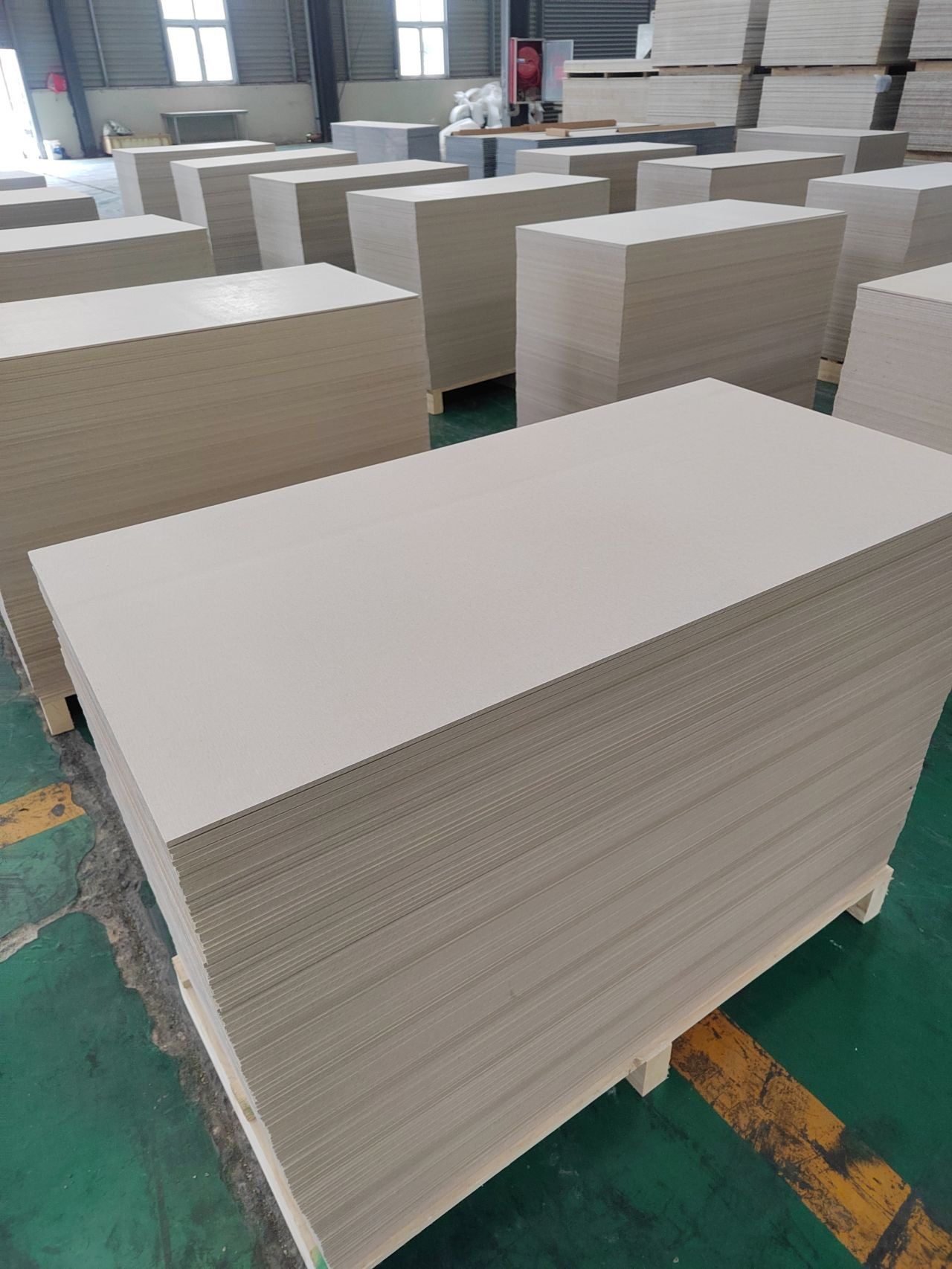
What is calcium silicate board?
Calcium silicate board is a hydrated calcium silicate material — principally xonotlite or tobermorite crystals — formed with reinforcing fibres and cured under pressure and steam. The result is a rigid, machinable board with a highly porous structure, typically 90% open porosity in the low-density grades.
That porosity is what gives the material its two defining properties: very low thermal conductivity, and very low heat storage. A board that does not store heat responds quickly to thermal cycling, which is why calcium silicate is the standard backup lining in furnaces, ladles and kilns that are heated and cooled repeatedly.
Three characteristics separate it from most other rigid insulation:
- It carries load. Compressive strength runs from 0.75 MPa in the lightest backup grades to 85 MPa in engineering grades — no other insulation board in this temperature class is structural.
- It machines cleanly. Boards can be sawn, drilled, turned and milled to close tolerance, so rings, discs, launder boxes and float plates are made from stock board rather than cast.
- It is non-combustible. All Wedge grades are asbestos-free and classified A1 non-combustible, with fireproof grades rated up to 240 minutes at 10 mm thickness.
It is also chemically stable in H₂, CO, CH₄, NH₃ and N₂ atmospheres, moisture and vibration resistant, and dimensionally stable — linear shrinkage at service temperature stays below 1% on most grades.
Types of calcium silicate board in the Wedge catalogue
The Wedge calcium silicate range runs to nine product families. They are not interchangeable — density, strength and temperature rating vary by an order of magnitude across the range, and specifying the wrong family is the most common costly error in this material.
1. Low density calcium silicate boards (W-LD 650 / 900 / 1000 / 1100)
The workhorse backup insulation grade, produced by Filter Press and Gel Tank technology. Four grades cover 650 °C to 1,100 °C at 220–255 kg/m³.
| Property | W-LD 650 | W-LD 900 | W-LD 1000 | W-LD 1100 |
|---|---|---|---|---|
| Service temperature | 650 °C | 900 °C | 1,000 °C | 1,100 °C |
| Bulk density (kg/m³) | 220–240 | 245 | 255 | 255 |
| λ at 400 °C (W/m·K) | 0.095 | 0.105 | 0.105 | 0.105 |
| Compressive strength (MPa) | 0.75 | 1.5 | 1.6 | 1.6 |
| Flexural strength (MPa) | 0.35 | 0.5 | 0.5 | 0.5 |
Applied as backup insulation behind the hot face in steel smelting and heat treatment, ceramic chamber and tunnel kilns, glass melting furnaces and cooling channels, cement heat exchangers and cyclone separators, and petrochemical crackers and reactors. See the W-LD 650 board specification and price.
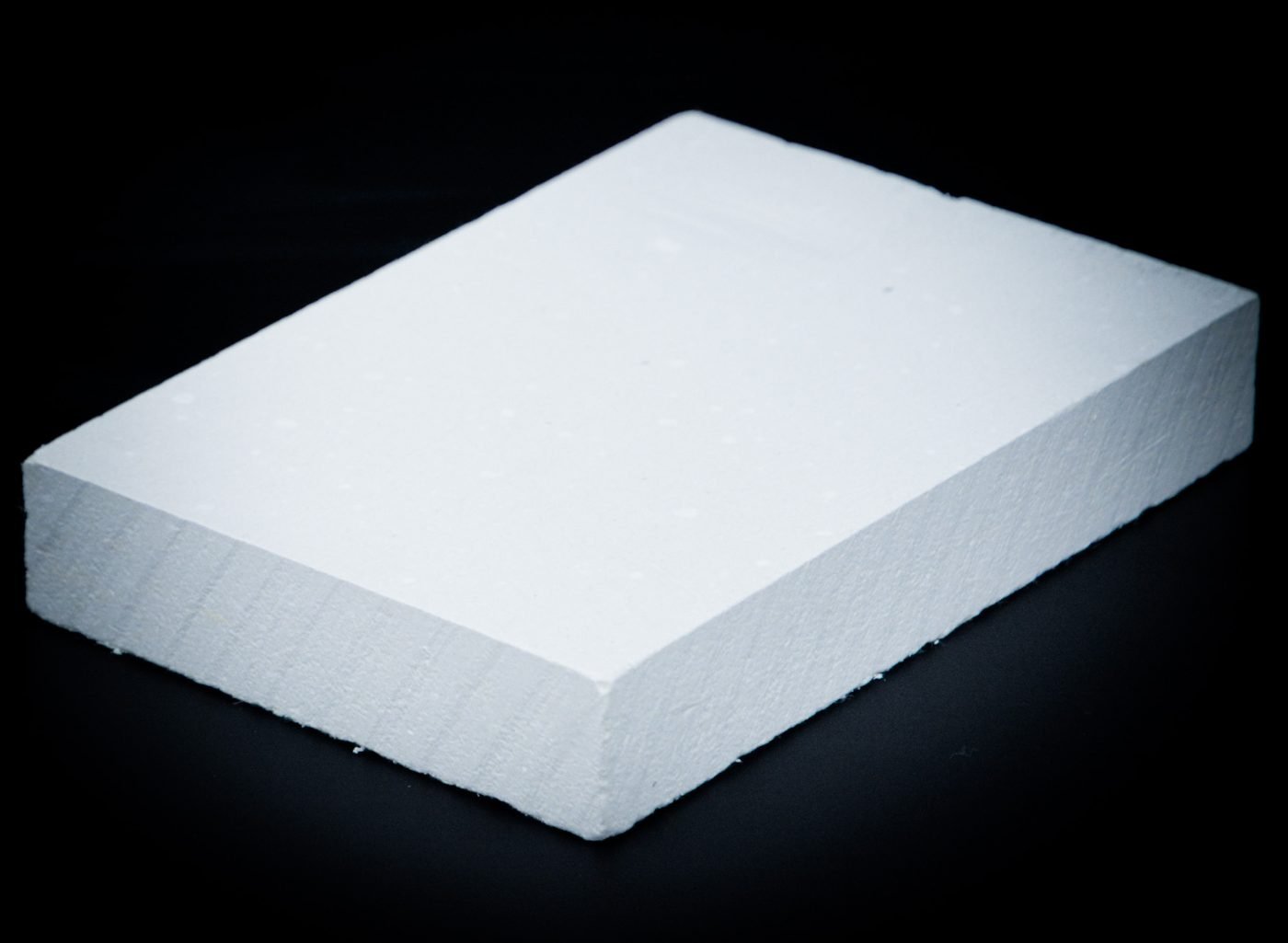
2. High density calcium silicate boards (HD L23 / HD150 / HD280 / HDT1000 / HD850)
Where the insulation has to take structural load. Compressive strength runs 15–85 MPa at densities of 750–1,800 kg/m³, service temperature 350–1,000 °C.
| Property | HD L23 | HD150 | HD280 | HDT1000 | HD850 |
|---|---|---|---|---|---|
| Classification temp. | 350 °C | 900 °C | 1,000 °C | 1,000 °C | 1,000 °C |
| Bulk density (kg/m³) | 1,800 | 750 | 950 | 1,400 | 900 |
| Compressive strength (MPa) | 85 | 15 | 28 | 55 | 18 |
| Bending strength (MPa) | 32 | 7 | 10 | 16 | 8 |
Used for hot-tank support bases, load-bearing pipe columns, die-casting platen insulation, induction-furnace structural parts, press platens, oven and drier wall cladding, heat shields and thermal breaks. High density board options.
3. High density CaSi for molten aluminium (HD900 / HD1000 / Z140 / M-1000 / C45)
Non-wetting grades for direct contact with molten aluminium — zero metal stickage, low oil absorption and low out-gassing. All five grades are rated 1,000 °C at 800–1,000 kg/m³, bending strength 7–12 MPa.
Specified for transfer and holding launders, floats, spouts and stopper pins, hot-top ring headers, tundish gates, bushing rings and casting machine transition plates. Low heat capacity means aluminium moves through the launder with minimal temperature drop.
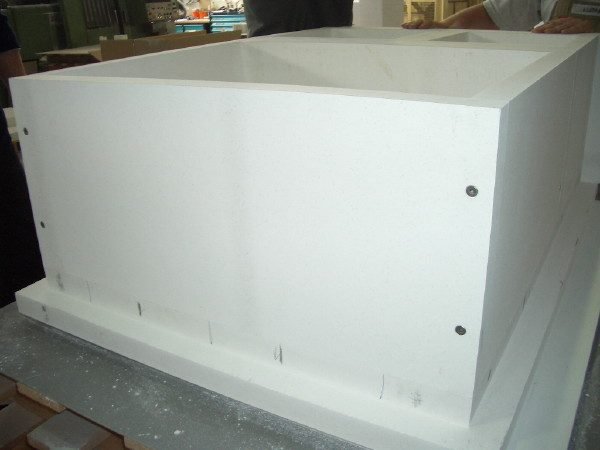
4. Graphite reinforced CaSi boards (W-CMA / W-C18 / W-CCG4 / WL-101)
A graphite and calcium silicate composite — 4–8% graphite content, 850–1,000 °C, 16–24 MPa compressive strength. Graphite adds toughness and reduces oil absorption and out-gassing further than standard CaSi, with almost zero stickage after aluminium contact and less oxide transport into the cast part.
Used for transfer ladles, bushings, hot-top rings, transition plates, tips, snouts, filter boxes, head boxes and casting-machine wear-contact parts.
5. Wollastonite calcium silicate boards (HSI 1100 and HSI 1200)
Calcium silicate bonded with wollastonite or refractory mineral fibres and high-temperature clays. Two grades: HSI 1100 at 1,000 °C and 0.12 W/m·K at 600 °C, and HSI 1200 at 1,200 °C and 0.17 W/m·K at 600 °C. Both at 1,000 kg/m³ with 8–10 MPa compressive strength and high electrical resistance at elevated temperature.
These are the boards for ladle and tundish insulation, lime and cement kiln linings, high-temperature gaskets and washers, boiler and oven insulation, oil and gas burner insulation, fire-rated doors, lifts and safes, and electrical-arc resistant applications.
6. High-temperature millboards and gaskets (RIMB 1000A / 1100A / 1260A)
Refractory-grade millboards from wollastonite, calcium silicate and rockwool fibres bonded with high-temperature clays. Classification temperature 1,000–1,260 °C at 1,000 kg/m³, with λ of just 0.11–0.13 W/m·K and compression strength 8–12 MPa.
Easy to cut and punch, and wet-mouldable for pipe insulation — used for ladle and tundish gaskets, refractory expansion joints, kiln backup insulation and stainless-steel plant rollers.
7. High density CaSi fireproof boards (FP1000 and SP1150)
The passive fire protection grades. Manufactured from cement, calcium silicate and asbestos-free minerals in 2,500 × 1,220 mm sheets, 4–30 mm thick, A1 non-combustible.
| Property | FP1000 | SP1150 |
|---|---|---|
| Density (kg/m³) | 880–900 | 1,150 |
| Fire rating at 10 mm | 240 minutes | 120 minutes |
| Short-term service temp. | 1,200 °C | 1,000 °C |
| λ at 20 °C (W/m·K) | 0.16 | 0.18 |
| Flexural strength (MPa) | 8 | 8 |
Applied to structural steel fire protection, FD30/FD60/FD120/FD240 fire doors, self-supporting ceilings and access panels, steel duct cladding, smoke barriers, parapet walls and timber-floor fire upgrades. Continuous operating temperature is 450 °C, with a service life beyond 15 years and no degradation from humidity. Fireproof calcium silicate board range.
8. Cement silicate engineering boards (Syndanio H91 series)
Seven grades — H91-WI, H91-WUK, L21, HD280, HDT800, HD900 and FP1000 — covering 250 °C to 1,000 °C operating temperature, up to 1,400 °C short-term. Compressive strength reaches 96 MPa and electrical strength up to 50 kV/mm.
H91 is the industry standard board for induction-furnace billet-heater boxes, cathode support pads for electrolytic cells, oven cladding, press platens and laminating tooling, and heat and electrical insulation in smelters. Syndanio H91 and L23 grades.
9. Calcium silicate sandwich panels (CalSil HD450)
A cement-bonded, purely mineral sandwich panel — calcium silicate board facings over a mineral wool core — at 450 °C continuous, 0.16 W/m·K and 9.3 N/mm² compressive strength. Standard panel size 2,440 × 1,220 mm; facing thicknesses 6, 8, 9, 10, 12, 15, 20 and 25 mm.
Large-sized and self-supporting, these panels combine thermal insulation, fire protection and acoustic control in one element for industrial dryers, furnace enclosures, hospital partitions and fire-protection walls. Sandwich panel construction options.
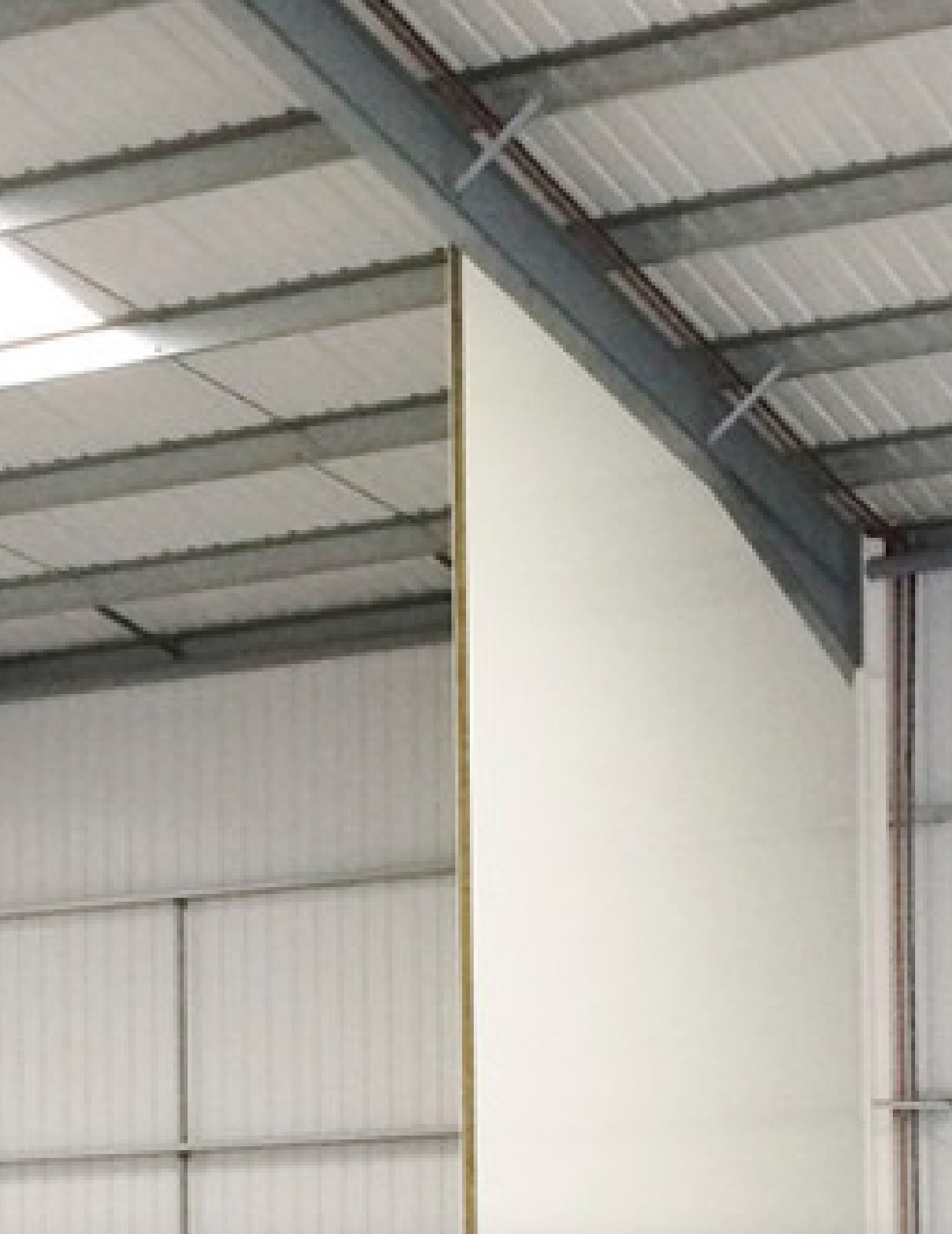
Related forms
Beyond flat board, the same chemistry is supplied as pre-formed pipe sections for process pipework, insulation pastes and powders for repair and jointing, and insulation refractory bricks (WETON 23 to WETON 32) rated 1,260–1,760 °C for furnace and kiln construction.
Locally manufactured and imported supply in India
Wedge Industries Limited supplies the calcium silicate range in India through two routes, and which one applies depends on the grade, the size and the volume.
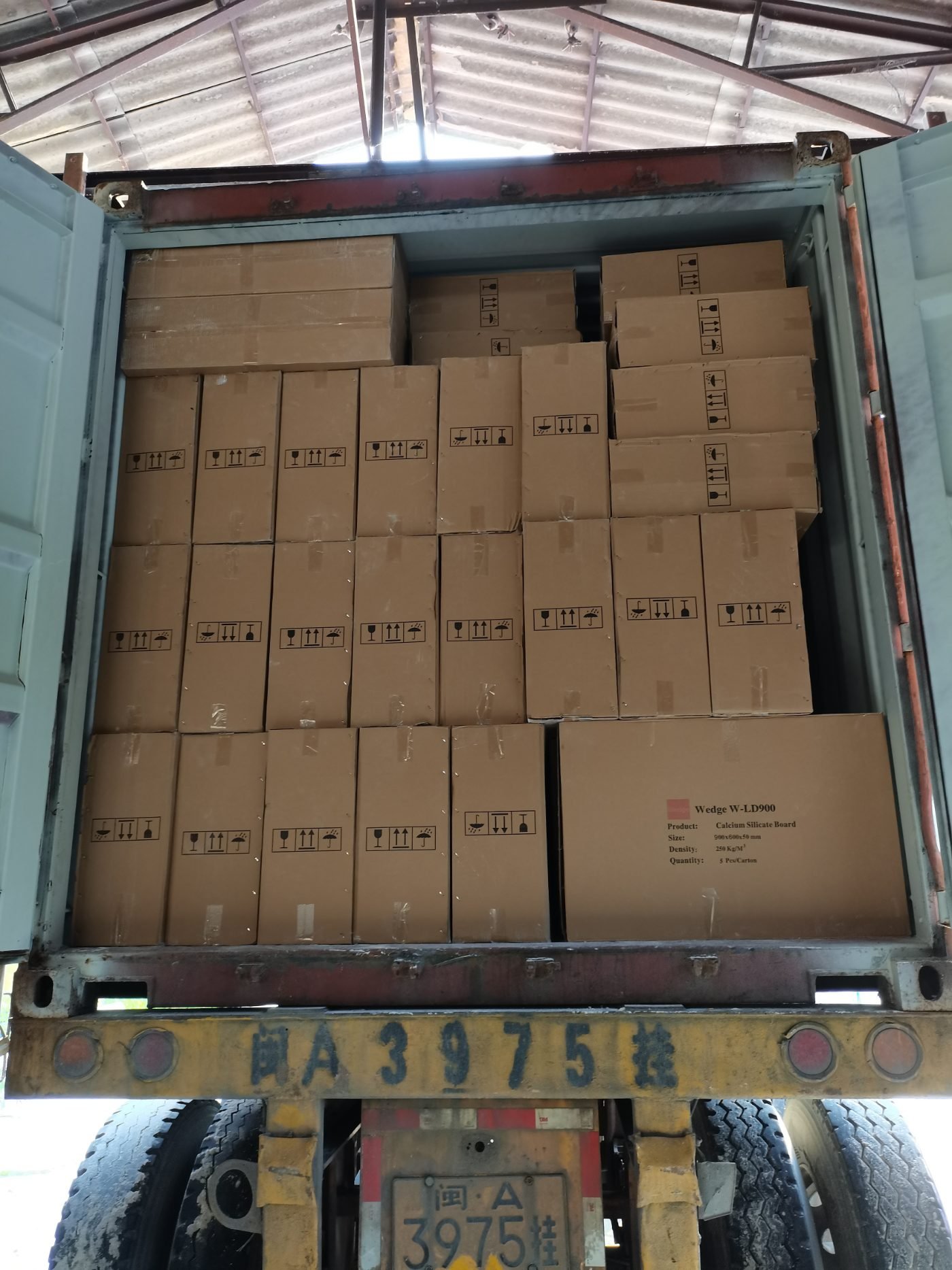
Locally manufactured grades cover the standard sizes and thicknesses that move in volume — the common board formats ordered by contractors, fabricators and fire-door manufacturers. These are held as running stock, which means shorter lead times, no import duty in the landed cost, and the ability to release partial quantities against a running project.
Imported grades cover the engineered end of the range — the specialist molten-metal, graphite-reinforced and high-strength engineering boards, and non-standard densities or sizes. These come through the Wedge Group’s international sourcing network, with manufacturing bases and supply partners across the UK, Europe and China.
The practical consequence for a buyer: a standard board specification for a partition, a fire door or a backup lining can usually be quoted ex-stock, while a machined launder component or a specific engineering grade is quoted on an indent basis with a defined lead time. Ask for both when you enquire — in a number of cases a locally available grade meets the duty and removes the import lead time entirely.
Export orders ship from India to the Gulf (UAE, Saudi Arabia, Qatar, Kuwait), Southeast Asia, Africa and Europe in container loads, with the same grade structure.
How to choose the right grade
Four questions settle the specification in most cases:
- What is the hot-face temperature? Below 650 °C, W-LD 650 is the economical choice. Above 1,100 °C you are into HSI 1200, RIMB 1260A or refractory brick territory.
- Does the board carry load? If it supports a tank, a platen or a column, you need a high-density grade — not a backup board. Check compressive strength against the actual bearing load, not the board’s temperature rating.
- Is there metal contact? Molten aluminium contact requires the non-wetting HD900–C45 grades or a graphite-reinforced board. A standard CaSi board in a launder will fail.
- Is this a fire rating or a thermal duty? A 240-minute fire rating comes from FP1000, not from a low-density backup board with a high temperature number on the datasheet.
For a thickness calculation, the insulation thickness calculator works from hot-face temperature, ambient conditions and target cold-face temperature.
Calcium silicate vs the alternatives
| Material | Max temp. | λ at 400 °C | Load-bearing | Machinable |
|---|---|---|---|---|
| Calcium silicate board | 350–1,200 °C | 0.095–0.30 W/m·K | Yes, to 85 MPa | Yes |
| Mineral wool board | Up to 850 °C | 0.10 W/m·K | Limited | Cut only |
| Ceramic fibre board | Up to 1,430 °C | Lower | No | Cut only |
| Vermiculite board | 1,100–1,150 °C | 0.17–0.20 W/m·K | 2.5–6.3 MPa | Yes |
Ceramic fibre insulates better per millimetre and goes hotter, but it cannot carry load and raises handling considerations. Mineral wool is cheaper but tops out around 850 °C with no structural capability. Calcium silicate is the material you specify when you need insulation, strength and machinability in the same component.
Installation notes
Boards cut with a standard carbide-tipped circular saw or handsaw and drill with masonry bits. Work in a ventilated area and use dust extraction where practical. Key points:
- Leave expansion allowance at joints in high-temperature linings — typically 2–3 mm per metre depending on service temperature.
- Fix with stainless steel or ceramic anchors in furnace work; galvanised fixings fail above 400 °C.
- Stagger joints between layers in multi-layer backup linings to break the thermal path.
- Store flat, dry and covered. The boards are moisture resistant but wet boards must be dried out slowly before first firing.
- Bring new linings up to temperature gradually on first heat cycle to allow residual moisture to escape.
Frequently asked questions
What is calcium silicate board used for?
Calcium silicate board is used for high-temperature backup insulation in furnaces, ladles, kilns and boilers; load-bearing insulation in hot tanks, pipe columns and press platens; non-wetting components in molten aluminium handling; passive fire protection for structural steel and fire doors; and fire-rated industrial partitions and heat shields.
What temperature can calcium silicate board withstand?
The Wedge calcium silicate range covers 350 °C to 1,200 °C depending on grade. Low density W-LD boards run 650–1,100 °C, high density boards 350–1,000 °C, wollastonite HSI boards up to 1,200 °C, and RIMB millboards to 1,260 °C. Related insulation refractory bricks extend to 1,760 °C.
Is calcium silicate board fireproof?
Yes. All Wedge grades are asbestos-free and classified A1 non-combustible. The dedicated fireproof grades give a fire rating of 120 minutes (SP1150) to 240 minutes (FP1000) at 10 mm thickness, which is why they are used in FD30 to FD240 fire door cores and structural steel encasement.
What is the difference between low density and high density calcium silicate board?
Low density boards (220–255 kg/m³) insulate better — 0.095 W/m·K at 400 °C — but carry very little load, at 0.75–1.6 MPa. High density boards (750–1,800 kg/m³) conduct more heat but carry 15–85 MPa and can be machined into structural components. Specify low density for pure thermal duty, high density where the insulation is also a structural element.
Is calcium silicate board available in India?
Yes. Wedge Industries Limited supplies calcium silicate board across India through both locally manufactured stock for standard sizes and thicknesses, and imported supply for engineered and specialist grades sourced through the group’s international network. Standard grades are typically available ex-stock; specialist grades are quoted with a defined lead time.
Request a quotation
Send the hot-face temperature, cold-face target, board size and quantity, and a Wedge engineer will come back with the grade recommendation, thickness calculation and a price — for standard board or machined components.
Download the Calcium Silicate Board catalogue
All nine grade families with full technical properties — thermal conductivity curves, density, compressive and flexural strength, fire ratings, sizes and applications. 17 pages, PDF, 3.1 MB.
Request a calcium silicate board quotation · Browse the full calcium silicate board range · Calcium silicate board price in India · Ladle insulation board selection