
The best ladle insulation boards cut steel ladle shell temperature by 150–190 °C and sidewall heat loss by up to 67%. In this case study, Wedge Industries Limited compares its two ladle insulation boards on a live 45–50 MT steel ladle enquiry — the Wedge Ceramic Microporous Composite Board FSMP 1450 and the Wedge Vermiculite Board VC900 — using steady-state thermal calculations per ASTM C680 and ISO 12241, layer by layer.
The Problem: A 45–50 MT Steel Ladle Running a 400 °C Shell
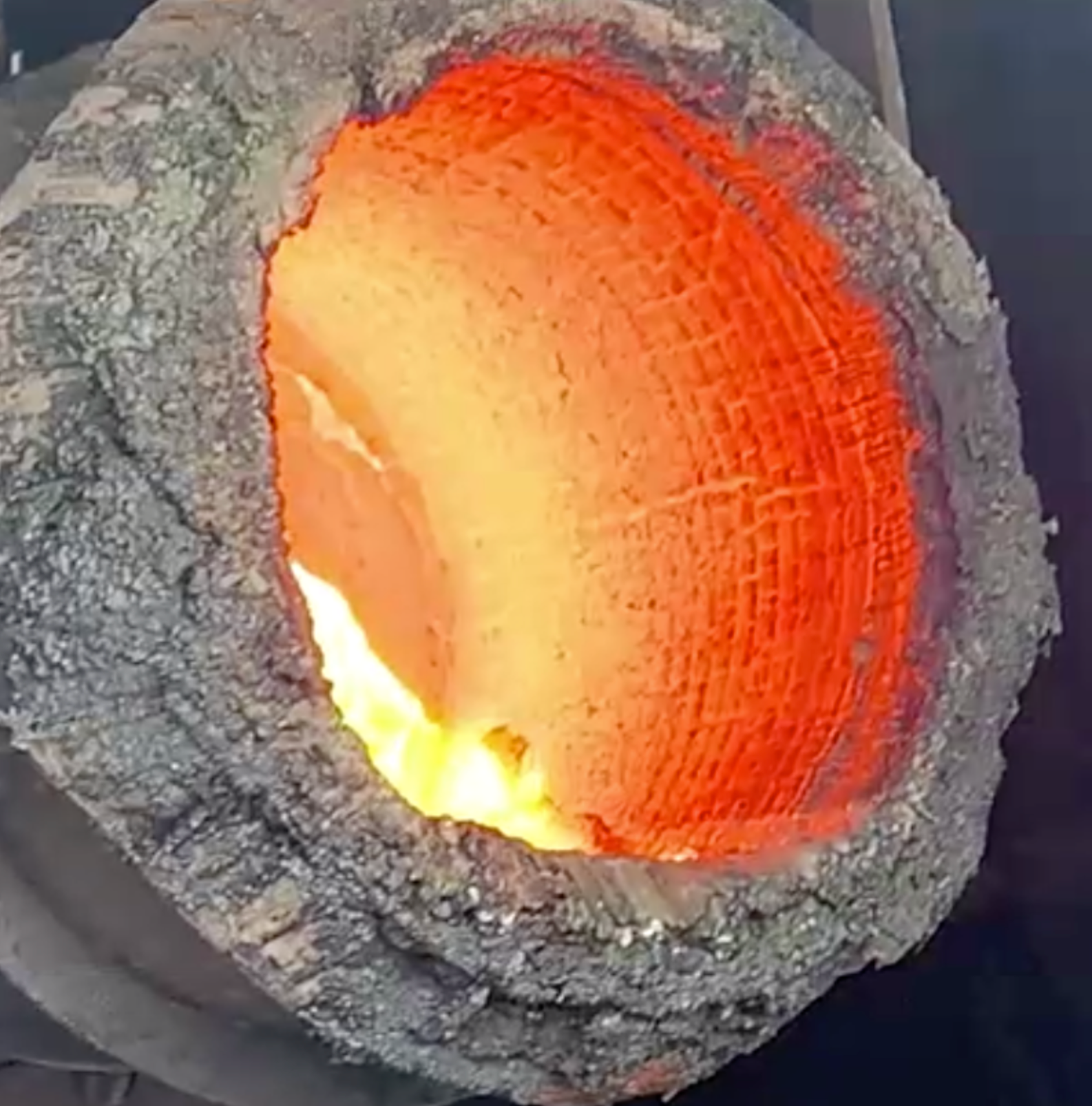
A steel plant in North India approached Wedge Industries Limited with a common problem. Their 45–50 MT ladle (shell 2,580/2,400 mm diameter × 3,200 mm height) showed a shell temperature of about 150 °C on a fresh lining — climbing to 400 °C after 55–60 heats once the lining was fully heat-soaked.
The lining pattern was standard Indian practice:
- 115 mm magnesia-carbon (MgO-C) bricks in the metal zone
- 115 mm dolomite bricks in the slag zone
- 2 × 38 mm high-alumina 60% safety lining
- Tapping temperature 1,670–1,690 °C, holding 45 minutes minimum
Ladle insulation boards fix this at its root. A hot shell is not just a safety issue. It is money leaving the ladle: every kilowatt lost through the sidewall is temperature lost from the steel, which the melt shop pays back as a higher tapping temperature in the EAF (electric arc furnace) or induction furnace.
Two Wedge Ladle Insulation Boards Compared
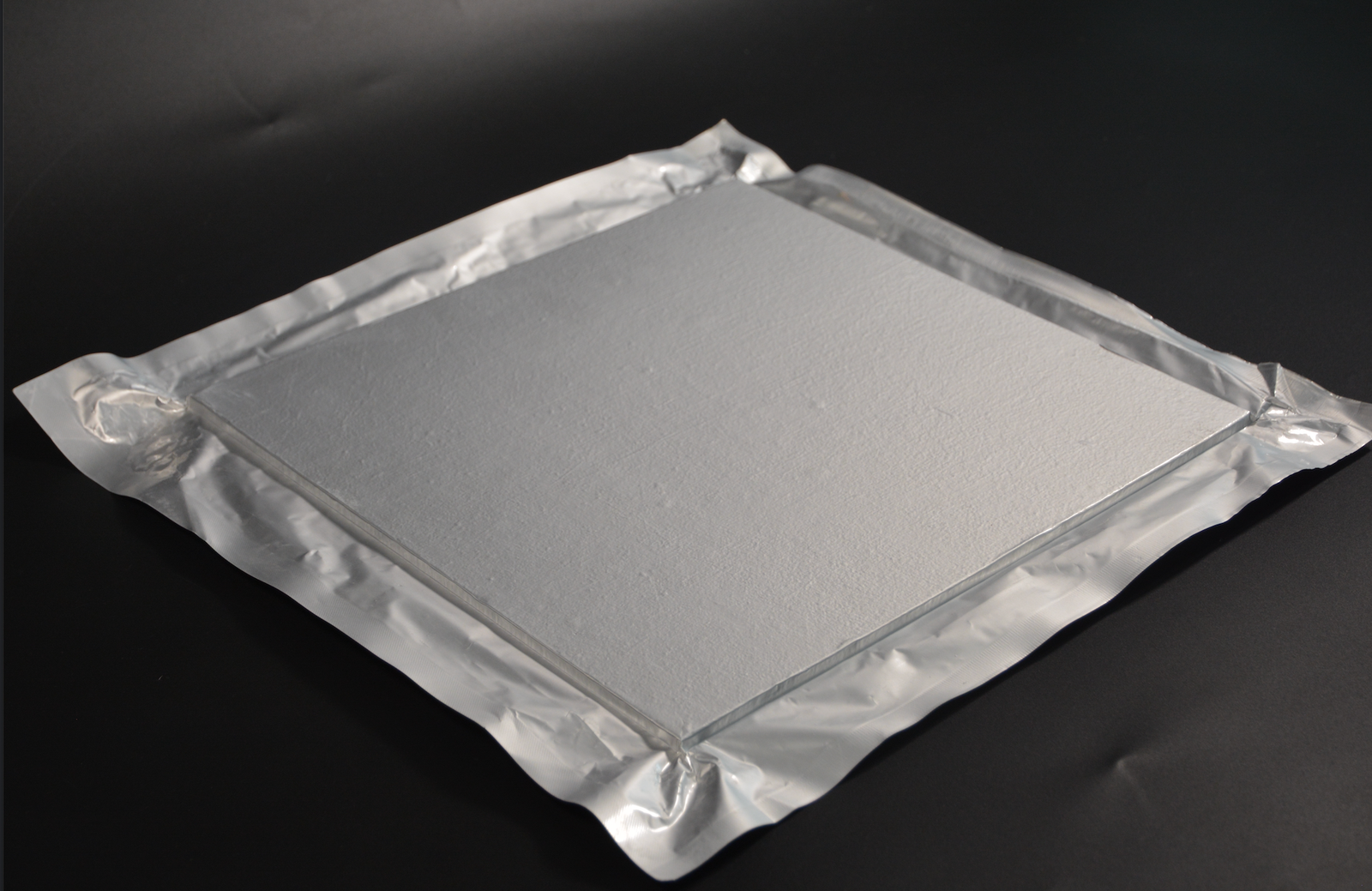
Wedge Industries Limited offered two ladle insulation boards, each installed as a single layer between the safety lining and the shell.
| Property | FSMP 1450 Ceramic Microporous Composite | WedgeVC 900 Vermiculite Board |
|---|---|---|
| Construction | Microporous core with 1,450 °C-grade ceramic fibre hot-face layer | Rigid exfoliated vermiculite board |
| Grade / service temperature | 1,450 °C (hot face) | 1,150 °C |
| Thickness offered | 15 mm (10 mm core + 5 mm hot-face layer) | 25 mm |
| Density (nominal) | ≈ 330 kg/m³ composite | 900 kg/m³ |
| Effective λ at 200 °C | 0.038 W/m·K | 0.18 W/m·K |
| Effective λ at 400 °C | 0.047 W/m·K | 0.19 W/m·K |
| Effective λ at 600 °C | 0.058 W/m·K | 0.20 W/m·K |
| Effective λ at 800 °C | 0.080 W/m·K | 0.23 W/m·K |
| Compressive strength | 0.55 MPa (core, at 10% deformation) | 6.3 MPa |
Thermal Results: Shell Temperature and Heat Loss
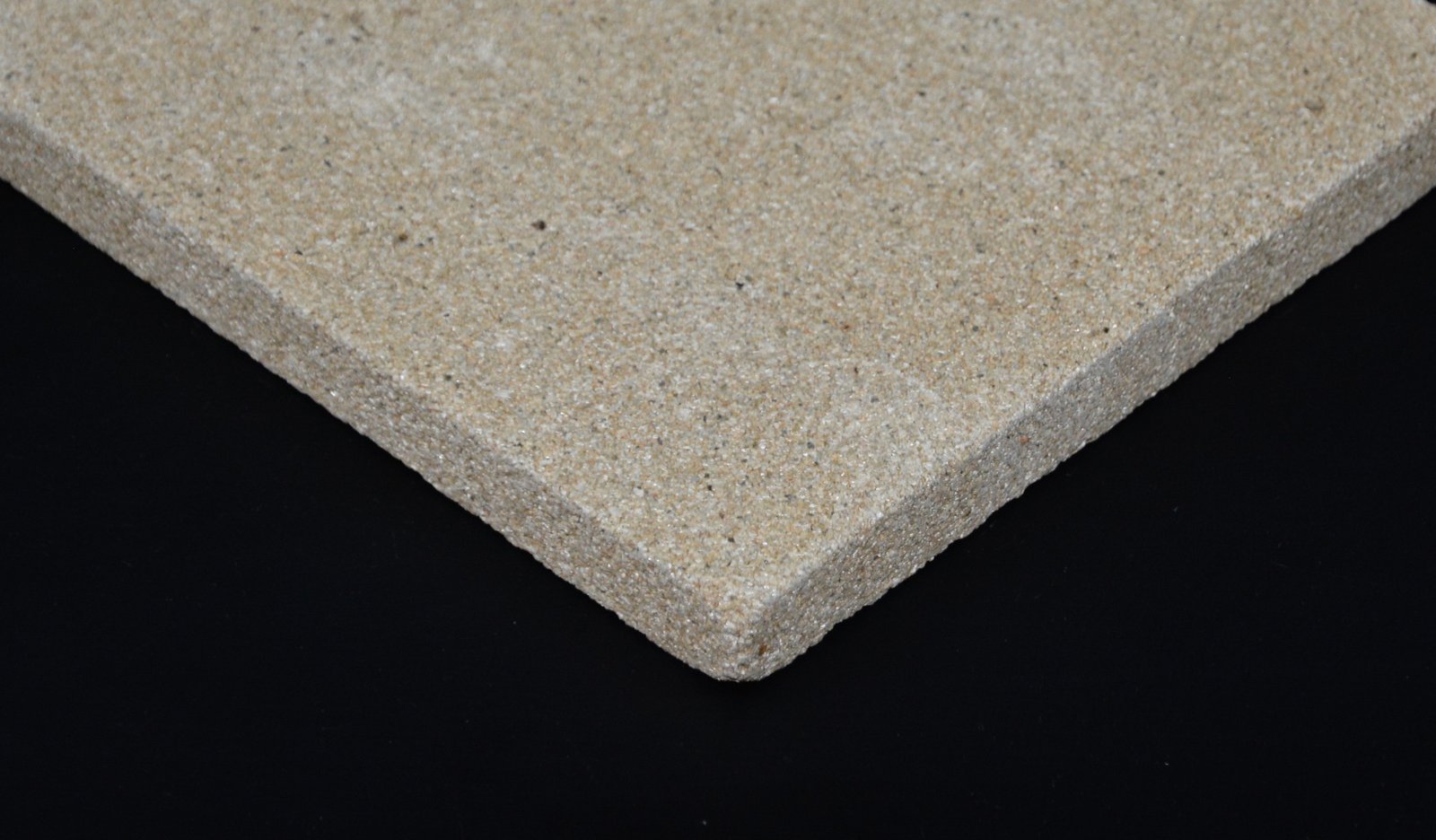
Steady-state calculations (cylindrical wall, ASTM C680 issue 2004, liquid steel at 1,680 °C, ambient 30 °C, temperature-dependent conductivity for every layer) gave the following for the metal zone — the hottest and most critical part of the sidewall. The calculation engine was benchmarked against a SimuTherm reference ladle case and reproduced it within 0.6% on heat loss.
| Case (metal zone) | Heat flux | Shell temp. | Board hot face | Margin to rating |
|---|---|---|---|---|
| No insulation (as found) | 16,582 W/m² | 467 °C | — | Baseline |
| FSMP 1450 composite, 15 mm | 5,385 W/m² | 274 °C | 1,304 °C | +146 °C vs 1,450 °C grade |
| WedgeVC 900, 25 mm | 7,247 W/m² | 318 °C | 1,166 °C | At its 1,150 °C rating — see note |
And in the slag zone (dolomite lining):
| Case (slag zone) | Heat flux | Shell temp. | Board hot face | Margin to rating |
|---|---|---|---|---|
| No insulation (as found) | 13,273 W/m² | 424 °C | — | Baseline |
| FSMP 1450 composite, 15 mm | 4,792 W/m² | 258 °C | 1,234 °C | +216 °C |
| WedgeVC 900, 25 mm | 6,411 W/m² | 299 °C | 1,076 °C | +74 °C |
Why FSMP 1450 Is Built as a Composite — Not a Plain Microporous Board
Here is the engineering behind the product, and a trap most suppliers will not tell you about. A plain microporous board is the best insulator available — conductivity lower than still air — but that is exactly what makes it dangerous in a ladle sidewall. It chokes the heat flow so effectively that its own hot face can be driven above the classification temperature of a standard microporous grade, and the board slowly degrades mid-campaign, silently losing the insulation you paid for.
Wedge FSMP 1450 solves this by design. Its 1,450 °C-grade ceramic fibre hot-face layer absorbs the temperature peak (about 1,304 °C in this case study — a comfortable 146 °C reserve) and holds the microporous core below 1,230 °C, safely inside its working range. One engineered board, installed in one operation, with every internal layer verified against its limit.
The lesson for any buyer: in ladle insulation, the interface temperature check matters as much as the shell temperature. Always ask your supplier for the full layer-by-layer temperature profile, not just the cold-face number.
Which of These Ladle Insulation Boards Should You Choose?
- Wedge FSMP 1450 Ceramic Microporous Composite, 15 mm — the premium choice. The coolest shell (≈274 °C, a 193 °C reduction), a 67% cut in sidewall heat loss, and the largest temperature reserve (+146 °C) of any option. The thinnest solution per degree of protection — 15 mm does what no single 25 mm board can.
- Wedge Vermiculite Board VC900, 25 mm — the robust economy choice. Shell down 149 °C and heat loss down 56% at a significantly lower board price, with 6.3 MPa compressive strength. Note: in the hottest metal-zone panels its hot face runs at about 1,166 °C, essentially at its 1,150 °C service rating — acceptable in the slag zone and moderate-duty ladles, but with no thermal reserve in severe metal-zone service. Where margin matters, specify FSMP 1450.
What Ladle Insulation Is Worth in Rupees
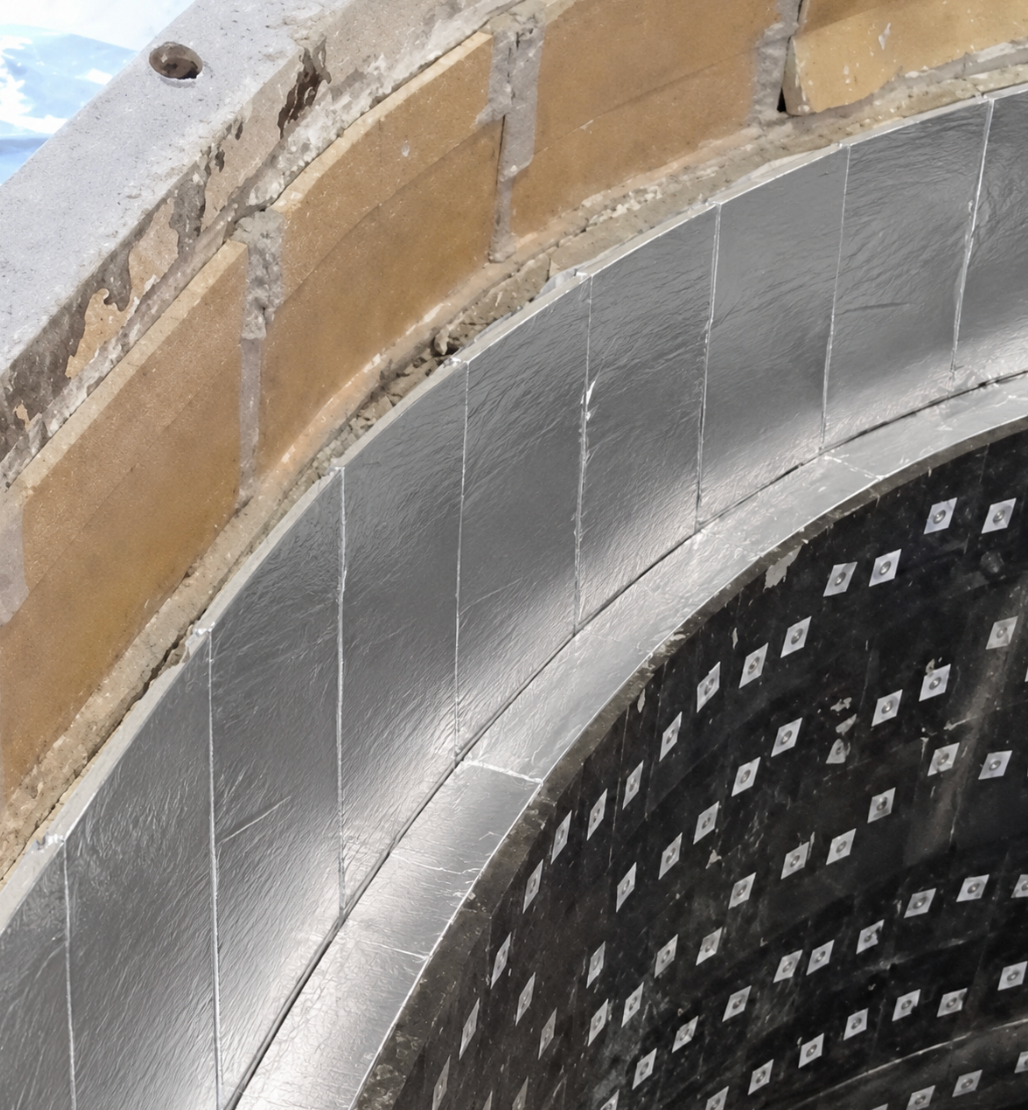
For this 45–50 MT ladle, FSMP 1450 saves roughly 262 kW of sidewall heat loss — about 18 °C less steel temperature drop over a 45-minute hold. VC900 at 25 mm saves roughly 217 kW, or about 15 °C. That typically allows a 10–15 °C reduction in tapping temperature, and every 10 °C of tapping temperature is worth around 5 kWh per tonne in the EAF.
Indicative arithmetic for a 47.5 t heat at ₹6.5/kWh (~$0.075/kWh): ₹1,650–2,300 (about $20–28) saved per heat. At 4,000 heats a year, that is roughly ₹66–92 lakh (about $79,000–110,000) per year — against a one-time insulation cost usually recovered within the first lining campaign. Actual savings depend on cycle times and power tariff; figures are indicative and a site-specific ROI sheet is available on request.
Installation in Brief
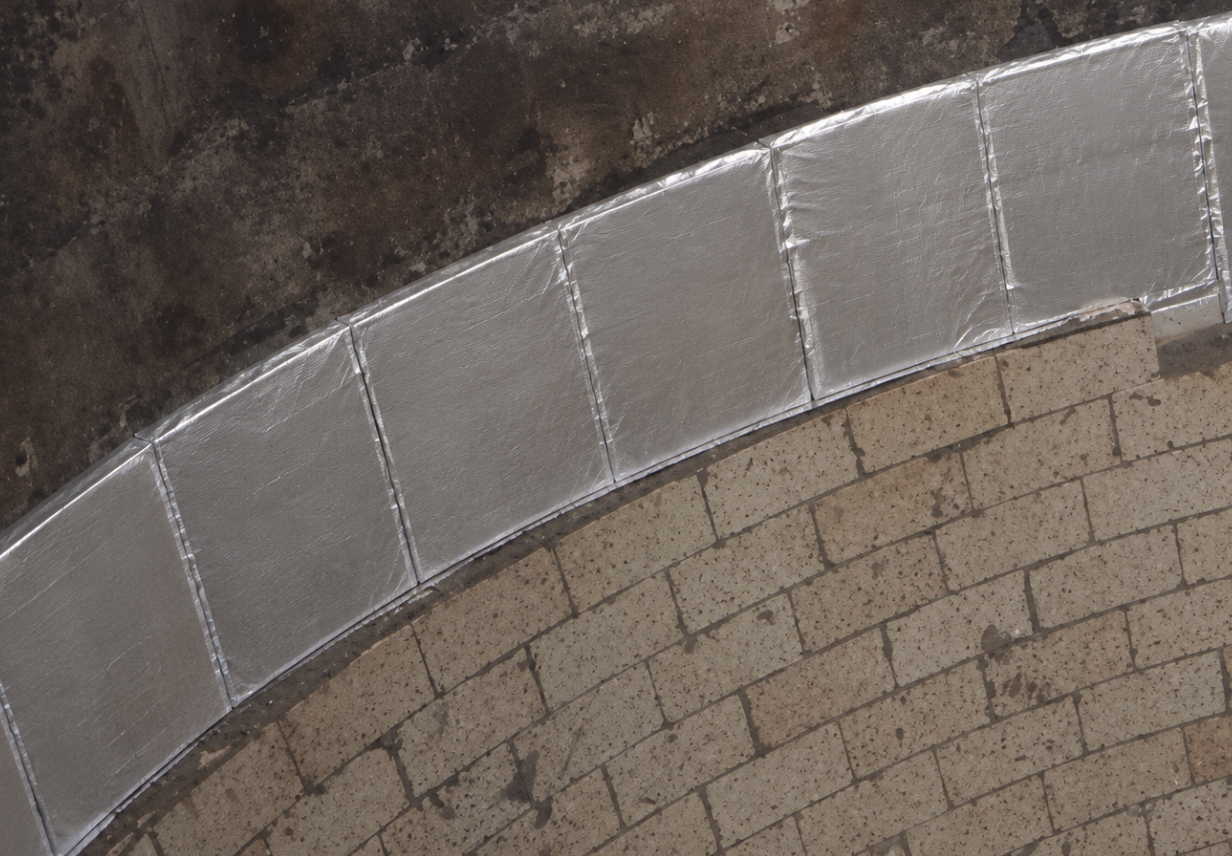
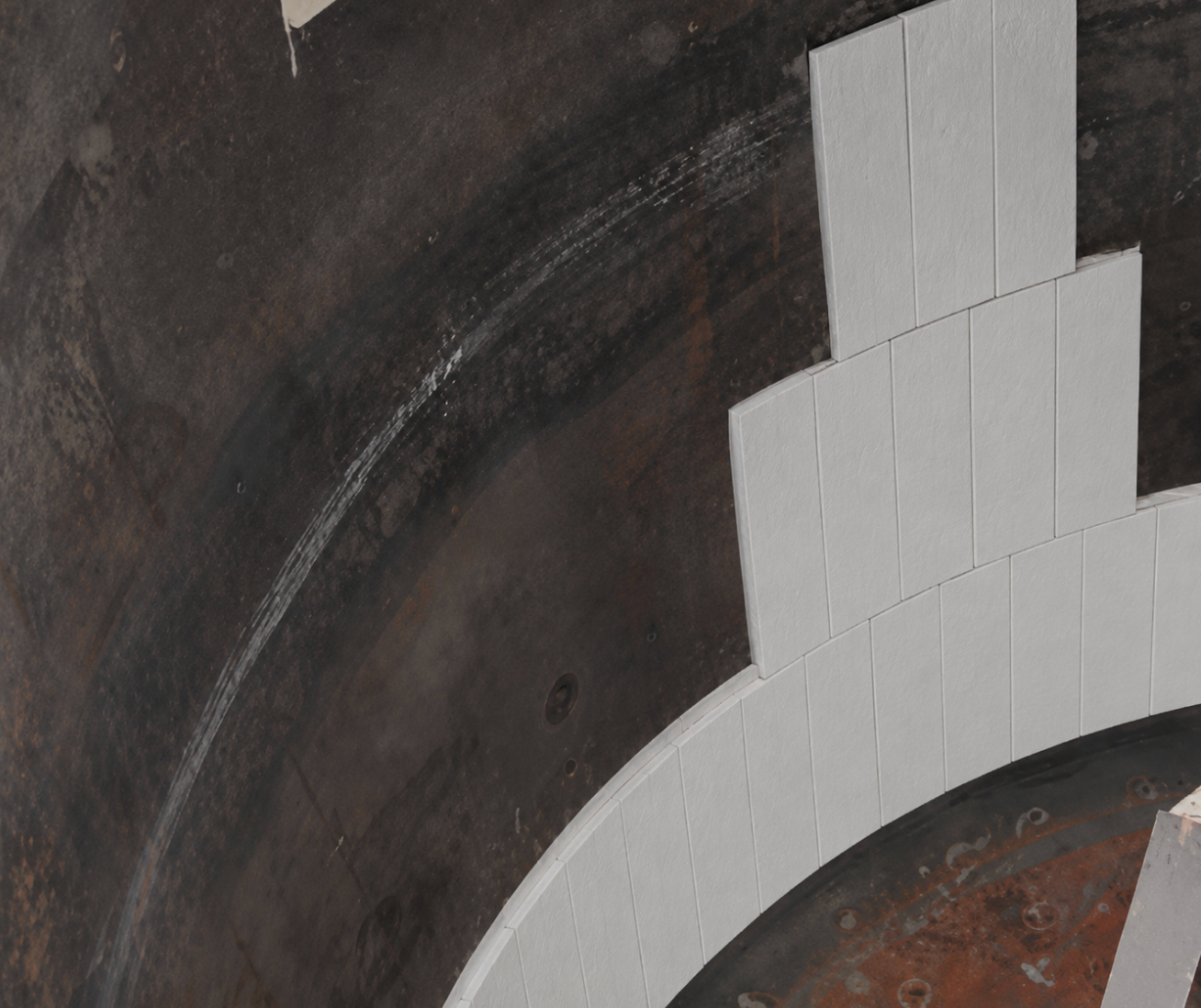
- Clean the shell inside surface; fix boards tight with high-temperature adhesive, joints staggered and butted — open joints locally negate the insulation.
- Boards cut easily with hand tools; a 45–50 MT ladle sidewall needs about 25 m² net (≈50 boards of 1,000 × 610 mm including cutting allowance).
- FSMP 1450 installs ceramic hot-face layer towards the safety lining, in a single operation — no separate felt layer to handle on site.
- Install the safety lining directly against the boards; a full installation method statement is supplied with the material.
FAQ: Ladle Insulation Boards
What is the best insulation board for a steel ladle?
For maximum performance, a ceramic-microporous composite such as Wedge FSMP 1450 at 15 mm: shell temperature down about 193 °C and sidewall heat loss down 67% in a 45–50 MT ladle case study. For economy-driven projects, a 25 mm vermiculite board such as WedgeVC 900 cuts the shell by about 149 °C.
Why is FSMP 1450 made as a composite instead of a plain microporous board?
A plain microporous board insulates so well that its own hot face can exceed a standard microporous classification temperature in ladle service. FSMP 1450’s 1,450 °C-grade ceramic hot-face layer absorbs the peak (about 1,304 °C in this study) and holds the microporous core below 1,230 °C.
How much does ladle insulation reduce shell temperature?
In this 45–50 MT case study, the calculated metal-zone shell temperature fell from 467 °C uninsulated to 274 °C with 15 mm FSMP 1450, and to 318 °C with 25 mm WedgeVC 900.
What thickness of insulation board is used in steel ladles?
Ladle insulation boards are typically 15–25 mm in the sidewall: 15 mm for a ceramic-microporous composite like FSMP 1450, or 25 mm for a vermiculite board like VC900. 10–20 mm is common under the bottom working lining.
Does ladle insulation save energy?
Yes. In this case study the two options saved 217–262 kW of sidewall heat loss, enabling a 10–15 °C lower tapping temperature — indicatively ₹66–92 lakh (about $79,000–110,000) per year at 4,000 heats, with payback typically inside the first lining campaign.
Related Reading from Wedge
- Wedge FSMP Microporous Overstitched & Quilted Insulation Blankets — the flexible microporous range behind the FSMP 1450 core.
- Case Study: Heat Shield Partition Wall for a 600 °C Industrial Heat Source — another engineered multi-option thermal study.
- All insulation guides and case studies from Wedge
Get a Ladle Insulation Proposal for Your Plant
Wedge Industries Limited manufactures both ladle insulation boards — the FSMP 1450 Ceramic Microporous Composite Board and the VC900 Vermiculite Board — and supports every enquiry with an ASTM C680 / ISO 12241 thermal calculation for your exact lining pattern, free of charge. We supply across India and export to 45+ countries including the UAE, Saudi Arabia, Qatar and Kuwait.
Request a quote and a free thermal calculation for your ladle →

Written by
Aishwar Bhatt
Techno-Commercial Consultant at Wedge India
Aishwar Bhatt is a Techno-Commercial Consultant at Wedge India (Wedge Industries Limited). He advises engineers, contractors and procurement teams on insulation, passive fire protection and building materials — from product selection and specifications to pricing and supply.
Connect on LinkedIn