
Aerogel for BESS is a 0.24–10 mm silica aerogel pad or sheet placed between the cells and modules of a battery energy storage system to slow heat transfer and stop one cell’s thermal runaway from spreading to the next. With a thermal conductivity of 0.018 W/m·K at 25 °C, a 1 mm aerogel pad does the insulating work of roughly 3 mm of mica or 5 mm of ceramic-fibre paper, which is why pack designers use it where every millimetre of cell pitch counts. This guide covers how aerogel barriers work in a BESS rack, the grades and thicknesses, the tests they support (UL 9540A, NFPA 855, IEC 62619), a worked example from a real 10,656-pack RFQ, and how to specify and buy die-cut aerogel pads in India.
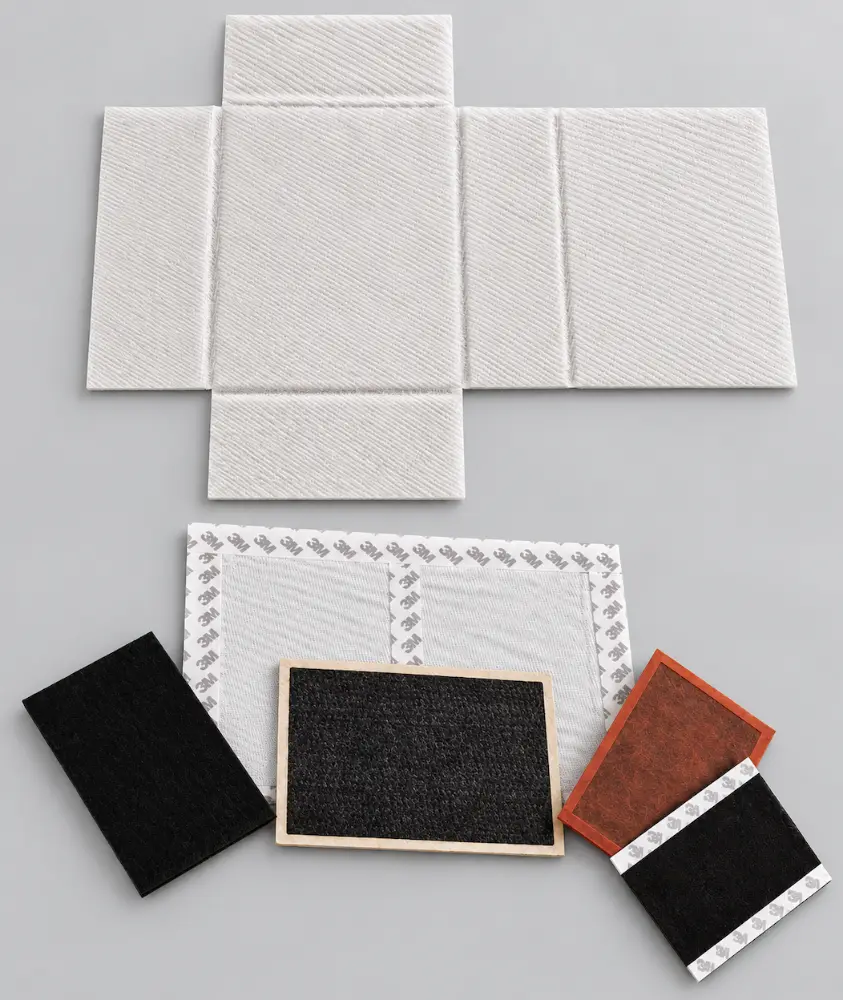
What is aerogel for BESS?
Aerogel for BESS is a thin thermal barrier — silica aerogel grown into a glass-fibre or carbon-fibre carrier and die-cut to the cell face — that sits between lithium-ion cells, between modules and under lids in a battery energy storage system to delay thermal-runaway propagation. It is the same material used as cell-to-cell insulation in electric-vehicle packs, supplied in larger formats for stationary storage.
A lithium iron phosphate (LFP) or NMC cell in thermal runaway can exceed 800 °C within seconds and vents hot gas at several hundred degrees. In a BESS container, hundreds of such cells sit millimetres apart in modules stacked into racks. The barrier’s job is to keep the neighbouring cell below its trigger temperature (typically 130–200 °C at the surface, depending on chemistry) for long enough that the battery management system can isolate the module, the suppression system can act, and the fault stays contained.
Aerogel does this with less thickness than any other passive material. Because more than 90% of its volume is air trapped in nanometre-sized pores, heat cannot cross it by convection, solid conduction is limited to a thin silica skeleton, and the fine structure scatters radiant heat. The result is a barrier that is 1–3 mm thick instead of 5–10 mm, which keeps cell pitch tight and energy density high.
Why BESS packs need a different barrier from EV packs
A BESS operates in a very different envelope from a vehicle battery, and it changes what the barrier must do:
- Scale. A 5 MWh container holds several thousand cells. A barrier failure propagates rack to rack, not cell to cell, so the material must perform at module and rack level as well as between cells.
- Duty cycle. BESS cells cycle daily for 15–20 years. The barrier must not compress, crumble or lose thermal performance over thousands of cycles of cell swelling and thermal expansion.
- Standards. Stationary storage is tested to UL 9540A (large-scale fire test at cell, module, unit and installation level), installed under NFPA 855, and cell-certified to IEC 62619 and UL 1973. In India, grid-connected BESS follows CEA safety regulations and BIS standards aligned to IEC 62619. None of these certify a barrier on its own — they test the whole assembly — so the material must be chosen to give the pack the best chance of passing.
- Environment. Outdoor containers see −20 to +55 °C ambient, high humidity and condensation. A hydrophobic barrier that keeps its properties when damp matters more than it does inside a sealed vehicle pack.
Aerogel meets all four. It is inorganic and non-combustible (Class A1 to EN 13501-1 / ISO 1182 on the silica grades), hydrophobic to 99% or better, dimensionally stable to 700 °C, and available in the thin gauges that BESS cell pitch demands.
Where aerogel goes in a BESS pack
| Position | Typical part | Thickness | WedGel grade | Purpose |
|---|---|---|---|---|
| Cell to cell (prismatic LFP) | Die-cut pad, full cell face, optional PSA | 1.0–2.0 mm | 650EV pad | Delay cell-to-cell propagation; absorb small swelling |
| Module side walls and end plates | Long strip or sheet | 1.5–3.0 mm | 650EV / AGF composite | Stop heat crossing between adjacent modules in a rack |
| Module and pack lid | Sheet under the lid, often laminated to mica | 2.0–5.0 mm | AGF composite + MIC mica | Flame and hot-gas barrier at the vent side |
| Busbar and terminal zone | Die-cut sheet with cut-outs | 0.5–1.0 mm | 650EV or CAC350 felt | Insulate terminals; withstand arc and flame |
| Rack floor and container walls | Board or blanket | 5–10 mm | WAG650 blanket / CFB ceramic board | Contain a module fire within the rack |
The cell-to-cell pad and the module side strip are the two parts that appear on almost every BESS drawing, and together they make up the bulk of the aerogel volume in a project.
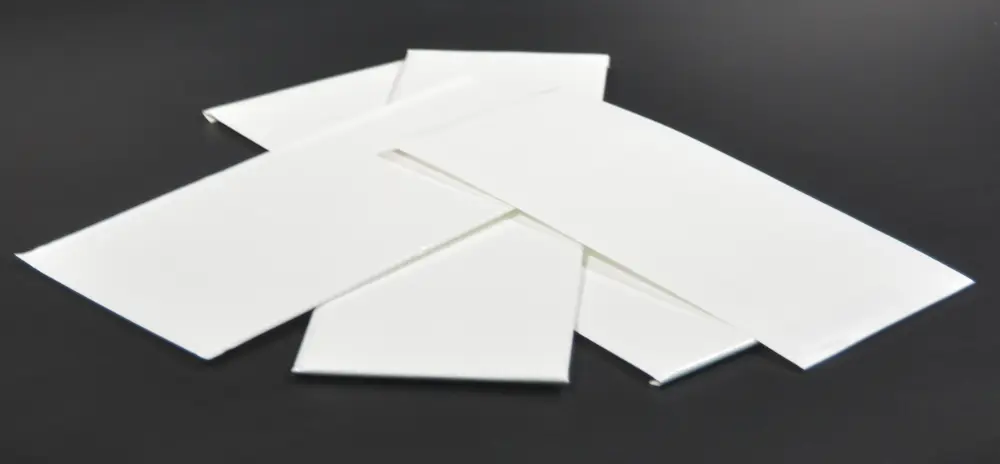
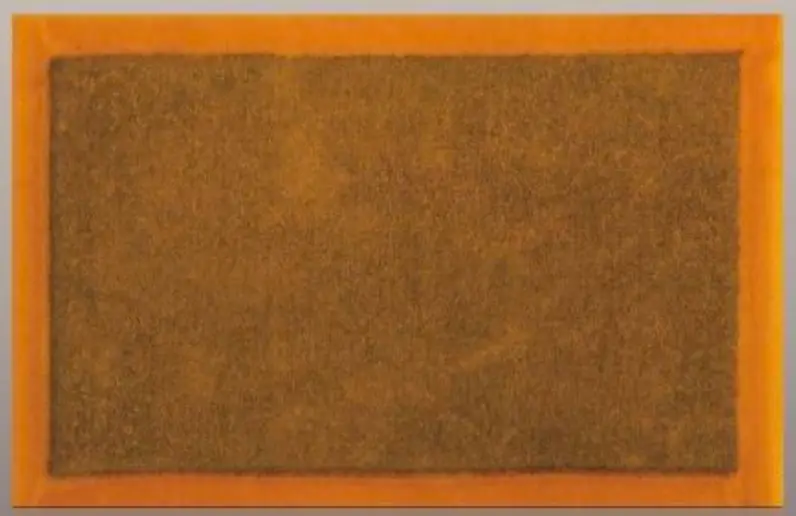
Aerogel BESS barrier specifications
All figures are from the WedGel catalogue 2026 and are supplied with a technical data sheet and material test certificate on every order. Blankets are manufactured to ASTM C1728.
| Property | WedGel 650EV pad | WedGel CAC350 carbon felt | Fire Barrier AGF composite |
|---|---|---|---|
| Thermal conductivity at 25 °C | 0.018 W/m·K | 0.021 W/m·K | 0.021 W/m·K class |
| Service temperature | −50 to +700 °C | 350 °C continuous, 1,200 °C short-term | Up to 1,200 °C |
| Thickness range | 0.24–10 mm | 1–10 mm | 1–5 mm |
| Fire class | A1 (EN 13501-1); UL 94 V-0 | Class A; UL 94 V-0 | UL 94 V-0 |
| Dielectric strength | ≥10 kV/mm | Conductive carrier — not for dielectric duty | On request |
| Water repellency | ≥99% hydrophobic | Hydrophobic | Hydrophobic |
| Supply form | Sheets, rolls, die-cut parts; PSA one or both sides | Sheets, die-cut parts | Sheets, die-cut parts |
For BESS the 650EV pad is the default cell-to-cell and module barrier: it is the only grade offered below 1 mm, it is dielectric, and it holds its shape at the 700 °C a venting cell can reach. CAC350 carbon felt is chosen where direct flame impingement is expected and dielectric isolation is provided elsewhere. The AGF aerogel-fire composite is the lid and vent-path material, usually paired with a mica barrier plate.
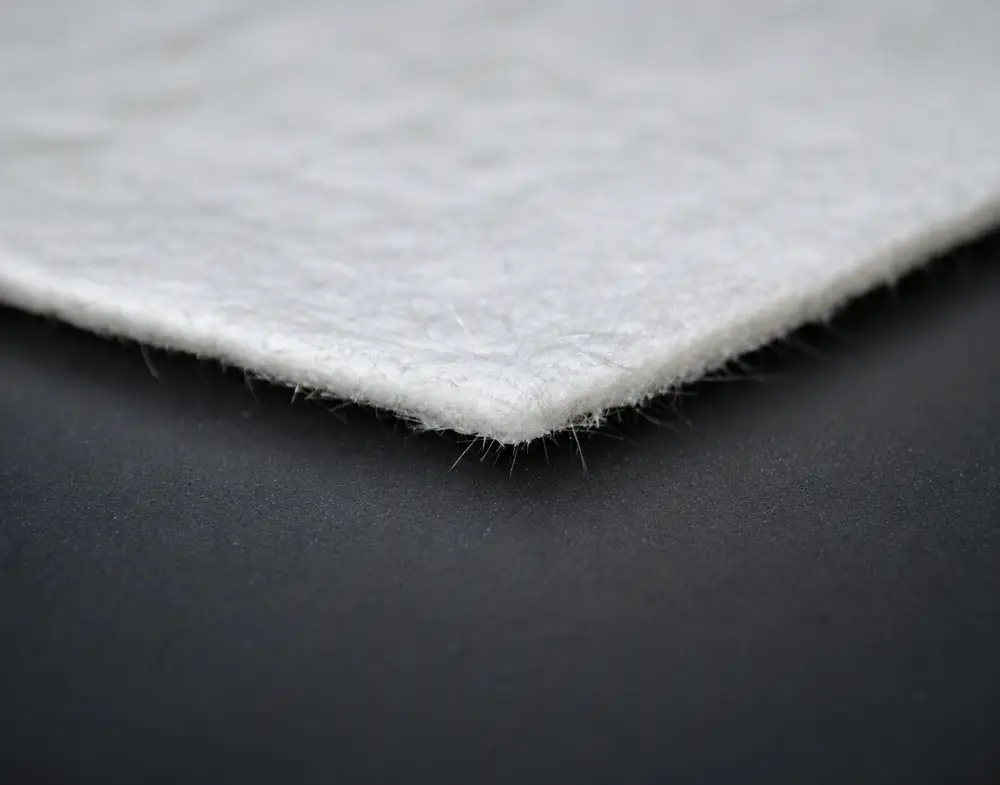
Aerogel vs mica vs ceramic fibre vs silicone foam in a BESS
| Property | Aerogel pad (650EV) | Mica laminate | Ceramic-fibre paper | Silicone foam pad |
|---|---|---|---|---|
| λ at 25 °C, W/m·K | 0.018 | 0.3–0.7 | 0.06–0.09 | 0.06–0.10 |
| Thickness for equal insulation | 1 mm | ≈ 15–35 mm | ≈ 4 mm | ≈ 4 mm |
| Max temperature | 700 °C | 1,000 °C | 1,260 °C | 200 °C |
| Flame barrier | Good; A1 | Excellent; rigid | Good; fibrous | Poor; chars |
| Compressibility / swelling | Low–moderate | None (rigid) | Moderate | High |
| Dielectric | Yes | Excellent | Moderate | Yes |
| Best BESS use | Cell-to-cell, module walls | Lids, busbars, terminals | Rack lining, floors | Swelling absorption only |
In practice a BESS module uses two or three of these together: aerogel between cells for insulation, mica at the lid and busbars for flame and dielectric duty, and a silicone foam compression pad at the end plates if cell swelling has to be taken up. Aerogel replaces the insulating function of the thicker materials, not the rigid flame plate.
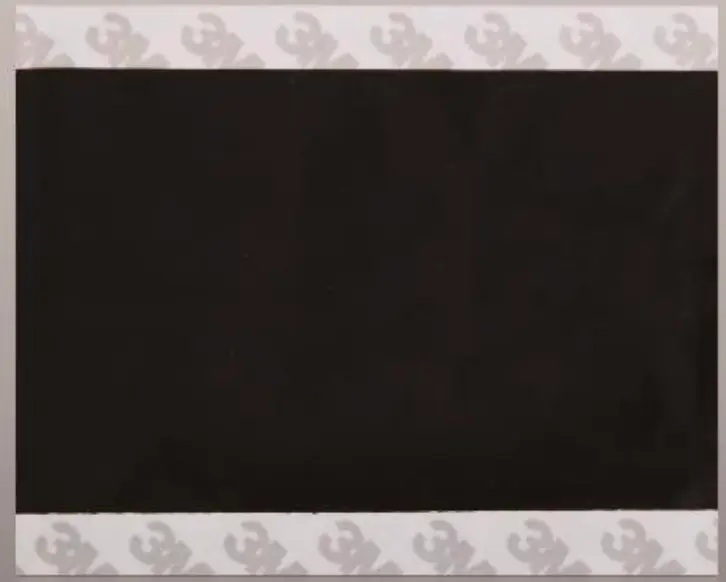
Worked example: a 10,656-pack BESS aerogel requirement
A recent enquiry received by Wedge Industries Limited shows what a production-scale BESS aerogel order looks like. The pack maker’s drawing called for two die-cut parts per pack:
| Part | Size | Qty per pack | Order quantity | Area |
|---|---|---|---|---|
| Cell-to-cell pad, 1.0 mm aerogel | 204 × 170 mm | 96 | 10,22,976 pcs | ≈ 35,500 m² |
| Module strip, 1.5 mm aerogel | 940 × 204 mm | 4 | 42,624 pcs | ≈ 8,200 m² |
| Total | 10,656 packs | ≈ 43,700 m² net |
Ninety-six cells per pack with a 204 × 170 mm pad points to a prismatic LFP cell of roughly that face size, with one pad between every pair of cells. The 940 × 204 mm strip at 1.5 mm runs the length of a module and lines the side walls, where the heat path is longer and a little more thickness is affordable.
Feasibility questions Wedge Industries Limited answers on a drawing like this before quoting:
- Thickness tolerance. 1.0 mm and 1.5 mm are within the 650EV range (0.24–10 mm). Standard tolerance is stated on the TDS; a tighter band is possible on request and affects price.
- Adhesive. Whether the cell pad needs pressure-sensitive adhesive on one face for placement during module assembly, and on which face.
- Nesting. 204 × 170 mm nests efficiently on a 1,200 mm or 1,500 mm sheet; the yield determines the net-to-gross material ratio and the price per piece.
- Packing. 96 pads per kit and 4 strips per kit means kitting per pack, not bulk packing, which is built into the offer.
- Schedule. 10,656 packs is a multi-month call-off. The quotation covers a monthly delivery schedule with buffer stock at Faridabad.
Send your own drawing with the cell format and quantity and a priced offer with the 650EV data sheet follows within one working day. Prices are given per piece and per m², in ₹ and $, ex-works Faridabad, excluding GST; the aerogel price guide for 2027 gives the blanket price bands that die-cut parts are derived from.
How to specify aerogel for a BESS project
A complete specification for a BESS aerogel barrier needs seven items. Sending all seven with the RFQ removes a round of questions and shortens the quotation to a day.
- Cell chemistry and format (for example prismatic LFP 280 Ah) and the target propagation delay in minutes, if your UL 9540A or IEC 62619 test plan sets one.
- Drawing (DXF or PDF) of each part with thickness, tolerance and any cut-outs.
- Adhesive: none, PSA one side, or PSA both sides, and which face.
- Quantity per pack, number of packs, and the monthly call-off.
- Compression under service: the stack pressure the pad will see, so the right density is chosen.
- Dielectric requirement at the position (cell-to-cell usually yes; rack lining usually no).
- Delivery location and packing (kitted per pack or bulk).
Wedge Industries Limited manufactures and converts aerogel in Faridabad, so prototype pads for a test module ship in days without tooling, and series parts are priced without import duty and ocean freight. UK and EU BESS integrators are supported from the group’s UK entity, and Gulf projects are shipped from India with export documentation.
Installation and handling in the module line
Aerogel pads are placed by hand or pick-and-place at module assembly. PSA-backed pads are pressed onto the cell face after the cell is cleaned; unbacked pads are held by the module frame. Aerogel releases a fine, inert silica dust when handled, so operators wear gloves and a dust mask at the cutting and kitting stage; die-cut, edge-sealed parts delivered in kits keep dust off the assembly line. The pads need no curing, no drying and no special storage beyond keeping them dry and flat.
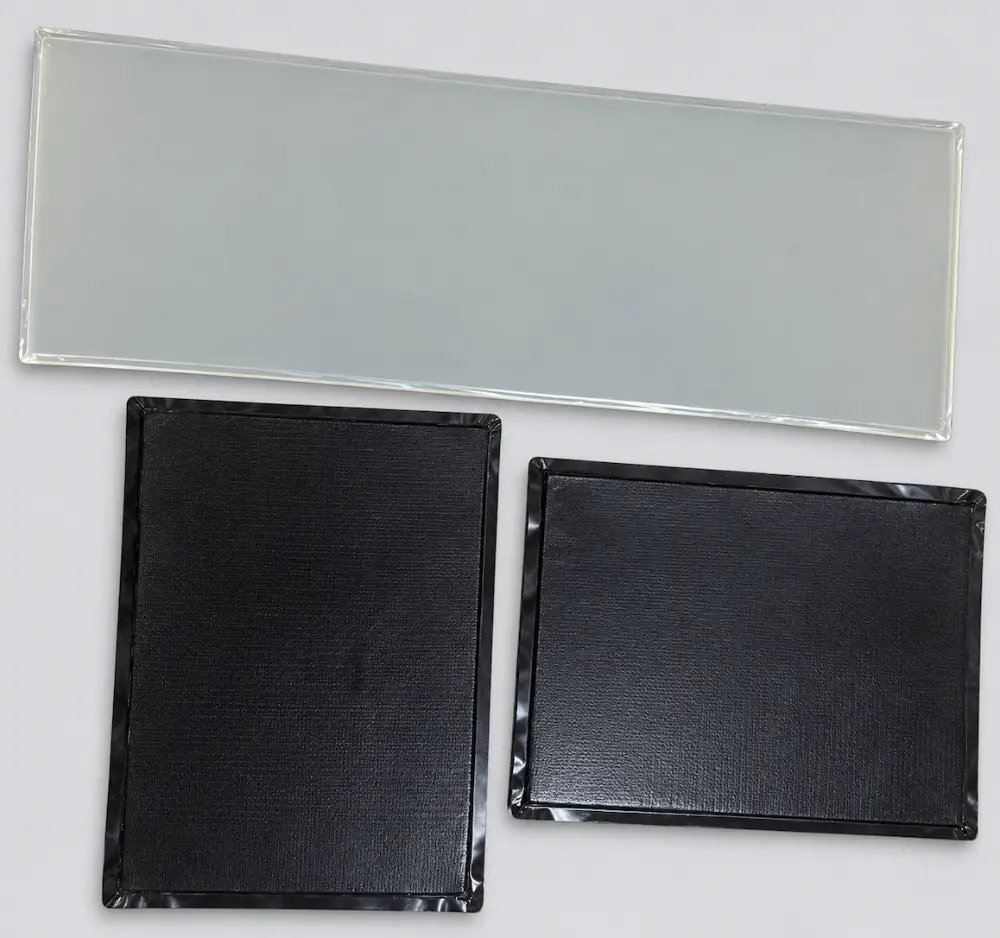
Related products and pages
- EV battery insulation and thermal runaway fire barriers — the full material stack for EV and BESS packs
- EV battery insulation pad (aerogel, 1–6 mm) — the cell-to-cell product page
- 300+ EV and BESS thermal and fire protection products
- WedGel aerogel insulation range
- Data-centre and UPS battery room insulation
- Passive fire protection range
Aerogel for BESS: frequently asked questions
What thickness of aerogel is used between BESS cells?
Most prismatic LFP storage packs use 1.0–2.0 mm aerogel pads cell to cell and 1.5–3.0 mm on module walls. The WedGel 650EV range runs from 0.24 mm to 10 mm, so thinner pads are available where cell pitch is critical and thicker sheets where a longer propagation delay is needed.
Is aerogel certified to UL 9540A or IEC 62619?
No single material can be. UL 9540A, IEC 62619 and NFPA 855 test or regulate the complete cell, module, unit and installation. Aerogel barriers are chosen to help the assembly pass; Wedge Industries Limited supplies the TDS, material test certificate and sample quantities so the integrator can run its own module and unit tests.
Aerogel or mica for battery energy storage?
Both, in different positions. Aerogel insulates: at 0.018 W/m·K it slows heat between cells with 1 mm of thickness. Mica is a rigid flame and dielectric plate for lids, busbars and terminals, and conducts heat roughly twenty times faster than aerogel. Most BESS modules use aerogel between cells and mica at the lid.
Does aerogel compress when cells swell?
Aerogel pads have low to moderate compressibility and recover little, so they are not used to absorb swelling on their own. Where prismatic cells swell over life, a silicone foam compression pad is placed at the module end plates and the aerogel pad handles the thermal duty.
How much aerogel does a BESS project need?
Roughly the cell face area times the number of cells for cell-to-cell pads, plus module wall area. In the example above, 10,656 packs of 96 prismatic cells needed about 43,700 m² of 1.0 and 1.5 mm aerogel. Send the drawing and pack count and the quantity, kit packing and price are worked out for you.
What is the price of aerogel pads for BESS in India?
Die-cut pads are priced per piece from the blanket price per m², the thickness, the nesting yield and whether adhesive is applied. Volume matters: a 10,000-pack call-off is priced differently from a 50-pack pilot. Quotations in ₹ and $, ex-works Faridabad, are sent within 24 hours on working days and exclude 18% GST.
Designing a BESS pack? Send the drawing
Share the part drawing, thickness, quantity per pack and number of packs. A Wedge engineer will confirm feasibility, propose the grade and adhesive option, and send a priced offer with the 650EV data sheet within one working day.
Get a price in 24 hours WhatsApp +91 97175 06848 Call +91 97175 06848