
Silica Aerogel: Properties, Structure, Types and Industrial Products Made in India
Silica aerogel is a nanoporous form of silicon dioxide that is over 90% air, with the lowest thermal conductivity of any solid insulation: 0.018 W/m·K at 25 °C. Wedge Industries Limited manufactures WedGel silica aerogel in India as blankets, felts, pads, boards, granules, powder, paints and vacuum panels, from −200 °C to +650 °C, with over ₹1 crore in ready stock.
What is silica aerogel?
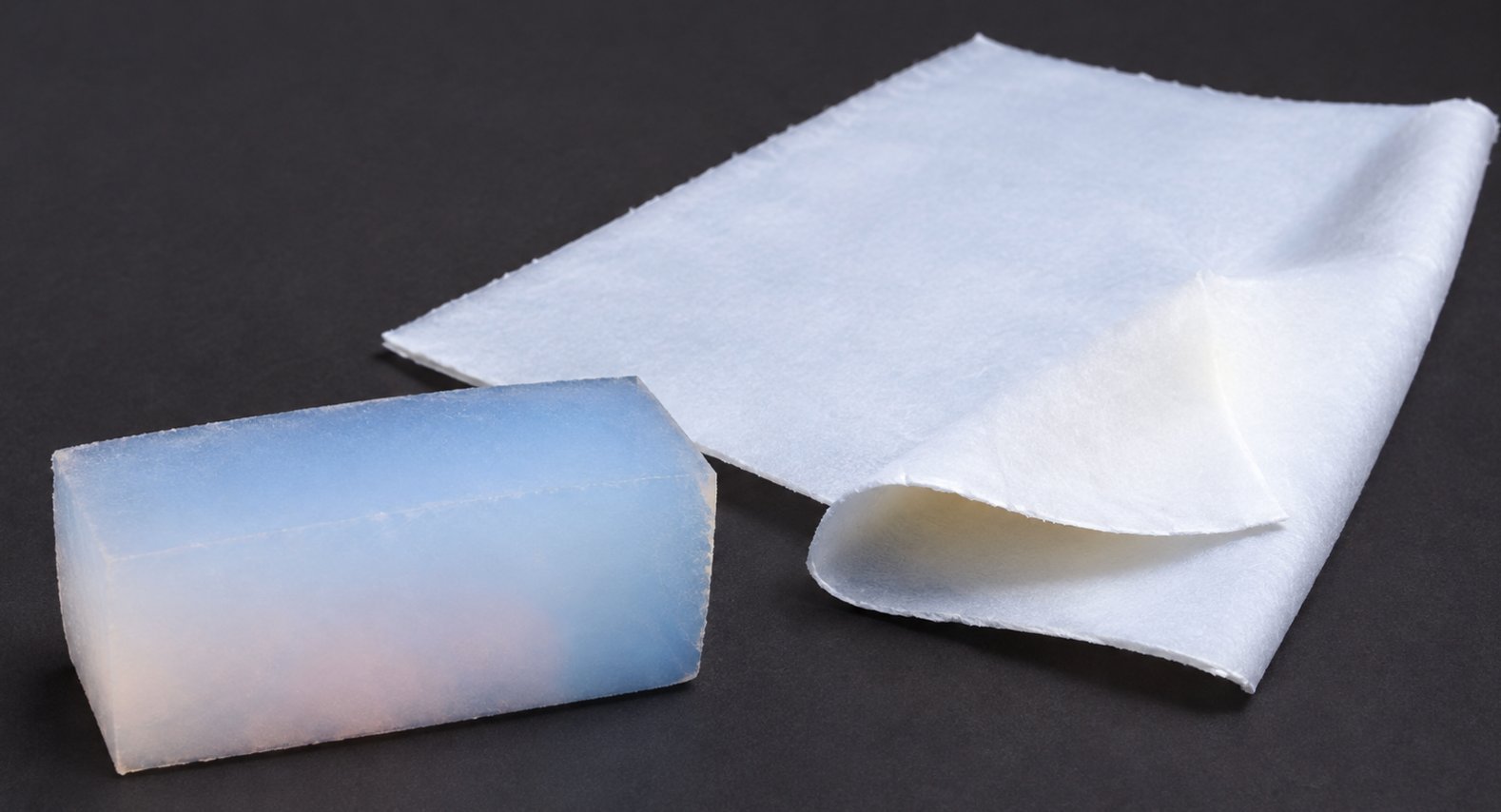
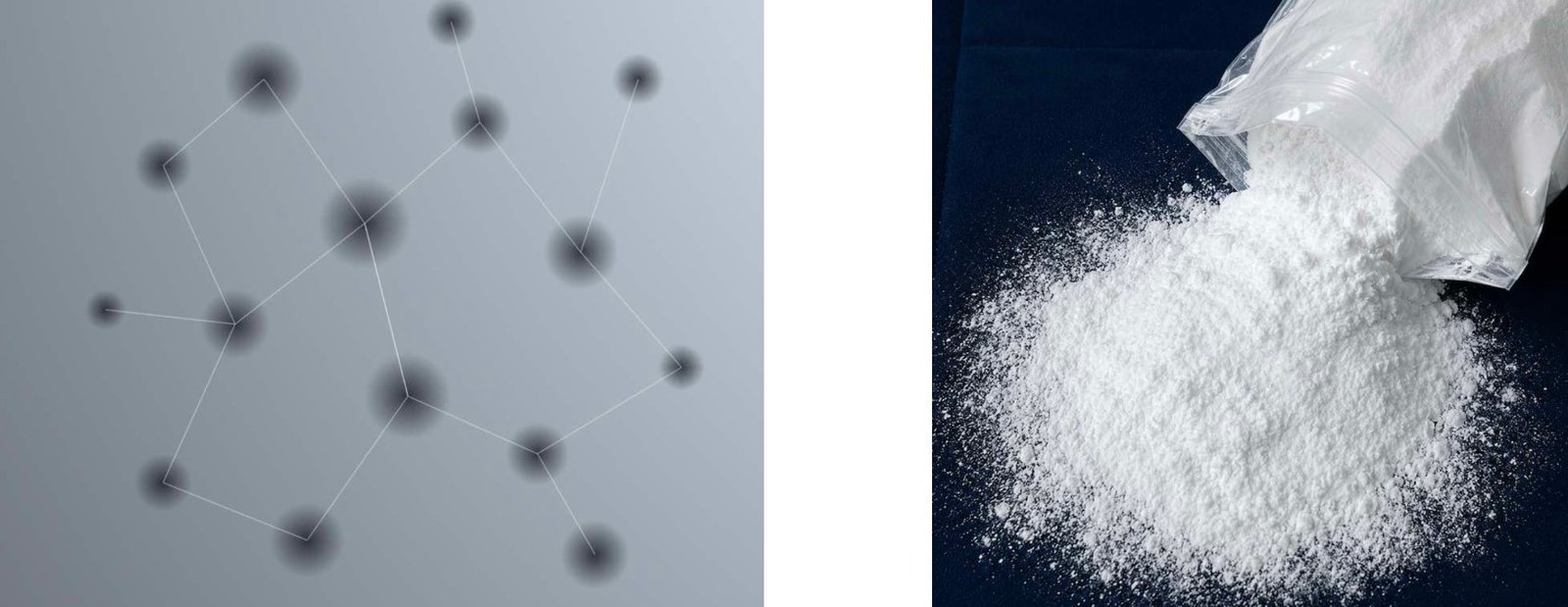
Silica aerogel is a solid made of amorphous silicon dioxide (SiO₂) arranged as a three-dimensional network of nanoparticles, with air filling more than 90% of its volume. It is made by forming a silica gel and then removing the liquid without letting the pores collapse. The pores are 20–50 nanometres across, smaller than the distance air molecules travel between collisions, so the trapped air cannot conduct or convect heat. The result is the lowest thermal conductivity of any solid insulation, 0.015–0.023 W/m·K depending on grade.
Of all the aerogel families (silica, carbon, polymer, metal oxide), silica is the one made at industrial scale. It is inorganic, non-combustible, chemically inert and stable from cryogenic temperatures to about 650 °C in continuous service. Pure silica aerogel is a translucent, bluish, brittle monolith; industrial silica aerogel is reinforced with a fibre carrier to make a flexible blanket, or supplied as powder and granules for compounding into paints, plasters and panels.
Silica aerogel properties
| Property | Pure silica aerogel monolith | WedGel silica aerogel blanket |
|---|---|---|
| Composition | Amorphous SiO₂, >99% purity | Silica aerogel in glass-fibre or ceramic-fibre carrier, hydrophobic surface treatment |
| Density | 3–150 kg/m³ (typically 80–120) | 150–200 kg/m³ (powder 20–100) |
| Porosity | 90–99.8% | >90% |
| Pore size | 2–50 nm, mean about 20 nm | 20–50 nm |
| Specific surface area (BET) | 500–1,200 m²/g | 600–800 m²/g |
| Thermal conductivity at 25 °C | 0.012–0.020 W/m·K | 0.018 W/m·K (0.015–0.023 across grades); 0.068 W/m·K at 600 °C |
| Service temperature | Stable to about 650 °C; sinters above 1,000 °C | −200 °C to +650 °C flexible; 1,000 °C rigid panel |
| Fire behaviour | Non-combustible | Class A, ASTM E84; EN 13501-1 A/A1; ISO 1182 tested; EV pads UL94 V0 |
| Water behaviour | Hydrophilic unless surface-treated | Hydrophobic, >99% repellency (GB/T 10299), vapour-permeable |
| Optical | Translucent, blue by Rayleigh scattering | Opaque white, grey or black depending on carrier |
| Mechanical | Brittle; 0.1–1 MPa compressive strength | Flexible, recovers after compression, cut with a knife |
| Acoustic | Sound velocity about 100 m/s, strong damping | Used in acoustic pads for rail and HVAC |
| Chemical | Inert to most solvents and acids; attacked by HF and strong alkalis | ASTM C795 / C1617 compatible with stainless steel |
Monolith values are published laboratory ranges. WedGel values are from the WedGel technical data sheets, tested to ASTM C1728 and ASTM C177.
How silica aerogel is made
The drying route and the precursor set the cost. Water-glass precursors with ambient-pressure drying on continuous casting lines are what have brought silica aerogel blanket down to ₹1,350–₹4,500 per m² in India. See aerogel cost for what moves the price.
Types of silica aerogel
| Type | What it is | Used for | Wedge product |
|---|---|---|---|
| Hydrophobic silica aerogel | Surface silanol groups replaced by methyl groups; repels water, floats on it | All industrial insulation; outdoor and process use | All WedGel blankets, WAP20 powder |
| Hydrophilic silica aerogel | Untreated; absorbs water and collapses when wet | Laboratory, catalysis, adsorption, cosmetics carriers | Not sold as insulation |
| Silica aerogel monolith | Cast block or tile, translucent | Research, daylighting glazing, Cherenkov detectors, NASA dust capture | Not an industrial product |
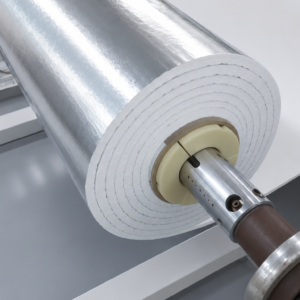
| Fibre-reinforced silica aerogel blanket | Aerogel gelled inside glass-fibre, ceramic-fibre or PET mat | Pipe, tank, LNG, building and furnace insulation | 25 WedGel grades, 3–20 mm |
| Silica aerogel felt and pad | Thin dense sheet, die-cut or encapsulated | EV and BESS cell barriers, heat shields | EV thermal pads, Felt Eco HT650 |
| Silica aerogel granules | Translucent beads 1–6 mm, hydrophobic | Cavity fill, gypsum, plasters, daylighting panels | AG granules |
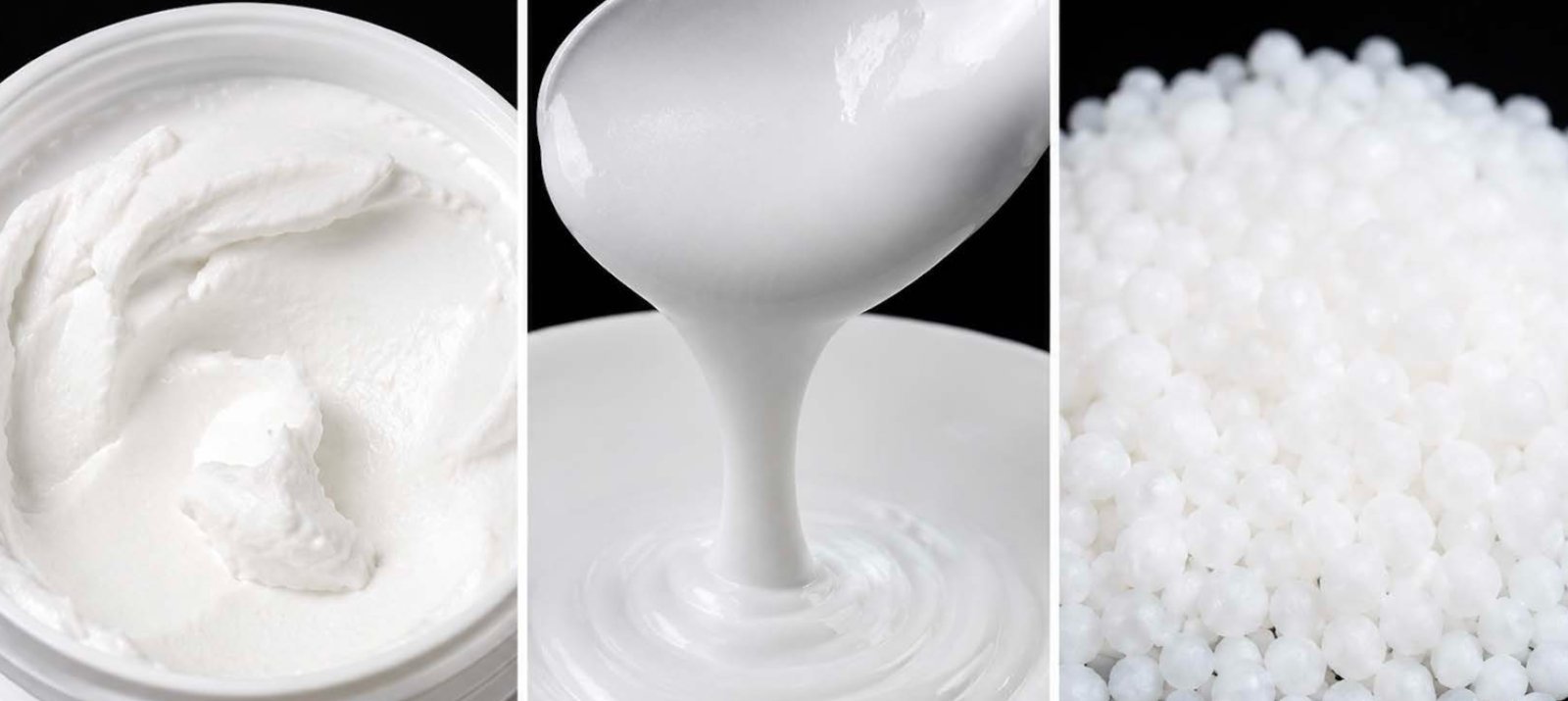
| Silica aerogel powder | Hydrophobic particles 2–50 µm, 20–100 kg/m³ | Thermal paints, films, composites, textiles | WAP20 powder |
| Silica aerogel composites | Aerogel bound into boards, pastes, paints or vacuum panels | Furnace backing, flanges, roofs, cold chain | RP1000 board, WJ paste, WJ120 paint, VIP |
| Doped silica aerogel | Silica with opacifiers (carbon, TiO₂) or alumina to cut radiative heat transfer | High-temperature blankets and boards | High-temperature WedGel grades to 650 °C and RP1000 to 1,000 °C |
Why silica aerogel insulates so well
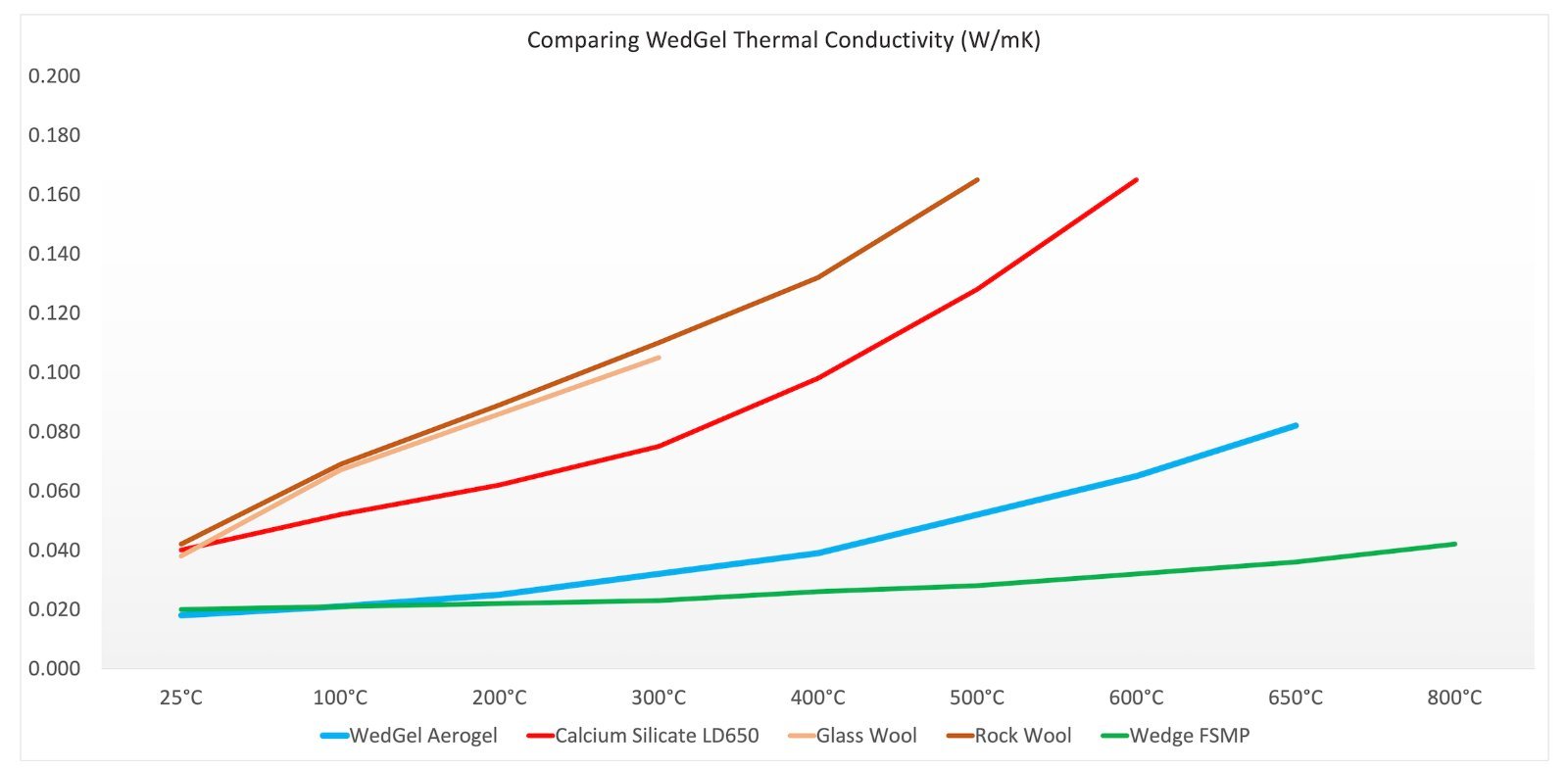
Heat crosses an insulation layer three ways: conduction through the solid, conduction and convection through the gas in the pores, and radiation. Silica aerogel attacks all three.
Silica aerogel vs other aerogels and insulation
| Material | λ at 25 °C (W/m·K) | Max service temperature | Fire | Typical use |
|---|---|---|---|---|
| Silica aerogel blanket | 0.018 | 650 °C (1,000 °C board) | Non-combustible, Class A | Industrial, LNG, building, EV |
| Carbon aerogel composite | 0.021 | 350 °C (1,200 °C short-term) | Flame-resistant | EV cell barriers, aerospace; CAC350 |
| Polymer (polyimide) aerogel | 0.020–0.030 | about 300 °C | Organic, limited | Flexible films, aerospace |
| Microporous (fumed silica) board | 0.020–0.025 | 1,000–1,100 °C | Non-combustible | Furnaces, steel ladles; microporous insulation |
| Vacuum insulation panel (aerogel core) | 0.005 | 80 °C | Depends on envelope | Cold chain; VIP |
| Mineral wool | 0.033–0.040 | 650–750 °C | Non-combustible | General industrial and building |
| Calcium silicate board | 0.050–0.060 | 650–1,000 °C | Non-combustible | Furnace, fire walls; calcium silicate boards |
Competing-material values are typical published ranges for comparison only.
Applications of silica aerogel
Industrial pipe and equipment
Steam, hot-oil and process lines to 650 °C in refineries, petrochemical and power plants; thin, hydrophobic layers that control corrosion under insulation.
LNG and cryogenics
Terminals, carriers and −200 °C pipelines with cryogenic grades 125A, 200 and 200HP.
EV batteries and BESS
Silica aerogel pads and felts between lithium-ion cells to stop thermal runaway propagating; UL94 V0, 1,400 °C flame withstand.
Buildings
Thin wall, roof and reveal insulation, aerogel plasters and paints, and granule-filled daylighting panels for retrofits and prefab.
Cold chain
Aerogel-core vacuum insulation panels at 0.005 W/m·K for reefer boxes, pharma shippers and cold rooms.
Passive fire protection
Non-combustible silica aerogel blankets on structural steel, cable routes and process assets.
Furnaces and kilns
Rigid opacified silica aerogel panels behind refractory for hot faces and kiln backing to 1,000 °C.
Paints, coatings and textiles
Hydrophobic silica aerogel powder as a thermal filler in paints, films, composites, outdoor clothing and footwear.
Science and aerospace
Monoliths in Cherenkov detectors, NASA’s Stardust comet-dust collector and Mars rover insulation; the uses that made silica aerogel famous.
Is silica aerogel safe?
Silica aerogel is amorphous (non-crystalline) silica, which is not classified as a carcinogen; the hazard associated with crystalline silica (quartz, cristobalite) does not apply. It is chemically inert and non-toxic. Cutting or handling blanket and powder releases fine dust and loose fibre that irritates skin, eyes and airways, so wear gloves, safety glasses and a particulate mask, cut with a sharp knife rather than abrasive tools, and work in a ventilated area. Hydrophobic grades are water-repellent, so wash hands with soap. Material safety data sheets are available for every WedGel grade on request.
Silica aerogel price
Silica aerogel blanket costs ₹1,350–₹4,500 per m² ($14–$47) in India at project quantity, about ₹1,400–₹2,200 per kg. A 5 mm blanket for surfaces up to 400 °C starts at ₹1,350/m²; 10 mm costs ₹2,450–₹3,850/m² by grade. Silica aerogel powder and granules are priced per kg by grade, particle size and quantity, and quoted per enquiry. Prices ex-works Faridabad, excluding 18% GST, updated 01-10-2026 at ₹96 per US$.
Full price list by grade and tier: aerogel price in India. Cost per pipe metre and installed-cost comparison: aerogel cost.
Silica aerogel manufacturer in India
Buy silica aerogel products
-
Aerogel Insulation
WedGel WAG650 Commercial Grade Aerogel Blanket up to 650°C
Contact for Price 📩 Contact for Price -
Aerogel Insulation
WedGel WAG400 Low Cost Aerogel Blanket for Process Pipes (up to 400°C)
Contact for Price 📩 Contact for Price -
Aerogel Insulation
WedGel 200 Standard Cryogenic Aerogel Blanket — -200 to +200 °C Service
Contact for Price 📩 Contact for Price -
Aerogel Insulation
WedGel WAP20 Hydrophobic Aerogel Powder — Coatings, Paint & Film Additive (15–50 µm)
Contact for Price 📩 Contact for Price -
Aerogel Insulation
WedGel AG Aerogel Bead Granules for Cavity Fill, Gypsum & Building Insulation (1–6 mm)
Contact for Price 📩 Contact for Price -

WedGel RP1000 Rigid Aerogel Panel for Steel Furnace Hot Face & Kiln Backing (up to 1000°C)
Read moreAerogel InsulationWedGel RP1000 Rigid Aerogel Panel for Steel Furnace Hot Face & Kiln Backing (up to 1000°C)
Contact for Price 📩 Contact for Price




View all 53 aerogel products →
Related guides
- Aerogel: what it is, what it costs and what it is used for.
- Aerogel insulation: the 25-grade WedGel selector and specifications.
- Aerogel price in India (2027) and aerogel cost.
- What is aerogel insulation?: the full guide with conductivity curves and TDS tables.
- Aerogel for BESS and microporous insulation.
Silica aerogel FAQs
What is silica aerogel made of?
Amorphous silicon dioxide (SiO₂), the same chemistry as glass and quartz sand, formed into a nanoporous network that is more than 90% air. Industrial grades add a glass-fibre or ceramic-fibre carrier for flexibility and a silane surface treatment for water repellency.
What is the thermal conductivity of silica aerogel?
0.012–0.020 W/m·K for pure monoliths and 0.018 W/m·K at 25 °C for WedGel silica aerogel blankets (0.015–0.023 across grades), rising to 0.068 W/m·K at 600 °C. Still air is 0.026 W/m·K and mineral wool 0.033–0.040 W/m·K.
What is the difference between silica aerogel and aerogel?
Aerogel is the family of materials made by replacing the liquid in a gel with gas; silica aerogel is the member whose skeleton is silicon dioxide. Carbon, polymer and metal-oxide aerogels exist, but silica aerogel is the only one made at industrial scale for insulation. When an insulation supplier says “aerogel”, they mean silica aerogel.
Is silica aerogel hydrophobic?
Untreated silica aerogel is hydrophilic and collapses when wet. All industrial grades are surface-treated with silanes to make them hydrophobic: WedGel blankets show over 99% water repellency to GB/T 10299 while remaining vapour-permeable, so they shed liquid water and let trapped moisture escape.
What temperature can silica aerogel withstand?
Silica aerogel is stable to about 650 °C in continuous service and sinters only above 1,000 °C. WedGel flexible blankets are rated −200 °C to +650 °C, the RP1000 opacified rigid panel to 1,000 °C, and fire-rated building and EV grades withstand 1,200–1,400 °C short-term flame exposure.
Is silica aerogel flammable?
No. Silica aerogel is inorganic and non-combustible. WedGel blankets are Class A to ASTM E84 and Class A/A1 to EN 13501-1, tested to ISO 1182; EV pads meet UL94 V0. The carrier and any facing determine the final rating, so check the TDS of the grade you specify.
Is silica aerogel toxic or dangerous?
No. It is amorphous silica, which is not classified as a carcinogen, and is chemically inert. Cutting blanket or handling powder releases dust and fibre that irritate skin, eyes and airways, so use gloves, glasses and a particulate mask. Material safety data sheets are available for every grade.
How much does silica aerogel cost?
Blanket costs ₹1,350–₹4,500 per m² ($14–$47) at project quantity in India, about ₹1,400–₹2,200 per kg. Powder and granules are quoted per kg by grade and quantity. Prices are ex-works Faridabad, excluding GST.
Where can I buy silica aerogel in India?
From Wedge Industries Limited, the manufacturer: order online at wedgeinsulation.com, call or WhatsApp +91 97175 06848, or send an enquiry. Blankets, powder, granules, pads, boards, paints and VIPs ship from ready stock in Faridabad across India and to 45+ export markets.
Can silica aerogel be used in paint or plaster?
Yes. Hydrophobic silica aerogel powder (WedGel WAP20, 15–50 µm) and granules (AG, 1–6 mm) are added to water-based paints, plasters, gypsum and composites to cut their thermal conductivity. Wedge Industries Limited also supplies ready-made aerogel paint (WJ120, 0.030 W/m·K) and high-temperature aerogel paste and coatings.
Get silica aerogel from the manufacturer
Tell us the form you need (blanket, powder, granules, pad, board, paint), the operating temperature and the quantity. Our engineers will recommend the grade and send a price in INR or USD within 24 hours.
Last updated 02-10-2026 by the Wedge Industries Limited technical team.