
Mica insulation is electrical and thermal insulation made from mica, a naturally layered silicate mineral that stays electrically insulating, arc-resistant and dimensionally stable at temperatures where glass-epoxy, polyester and other organic laminates have long since failed. Pressed into boards, sheets, rolls, tubes and gaskets, mica works continuously at 550 °C, 800 °C or 1100 °C depending on grade, with dielectric strength above 19.7 kV/mm and a UL 94 V-0 flammability rating.
This guide explains what mica insulation is, the three mica types, the product forms you can buy, where each one is used, how it compares with the alternatives, and how to specify and order it from Wedge Industries Limited in 2027.
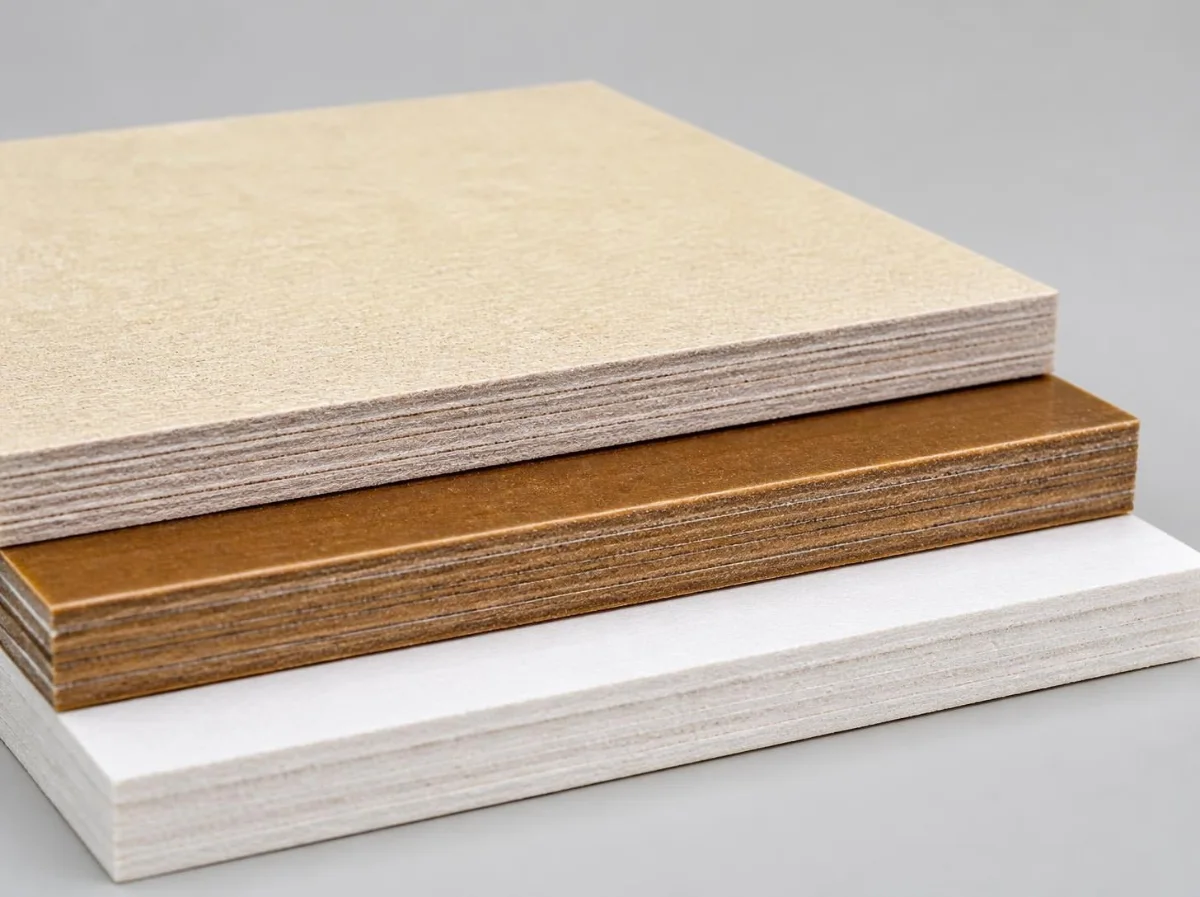
What is mica insulation?
Mica is a group of sheet silicate minerals that cleave into thin, flexible, transparent flakes. Each flake is an almost perfect electrical insulator with very high dielectric strength, extremely low dielectric loss and no softening point below red heat. On its own a flake is small and fragile, so industry turns mica into two families of product:
- Natural sheet mica — blocks, splittings, strips, discs and washers cut straight from mined muscovite, used where a thin, clear, very high-dielectric piece is needed (gauge-glass shields, capacitor splittings, transistor washers).
- Mica laminates (micanite) — mica paper made from reconstituted flakes, impregnated with a binder and pressed under heat into rigid boards, thin plates, flexible sheets, rolls and tubes. A heat-stable silicone binder keeps the laminate working up to 1100 °C.
Mica is therefore unusual: it is both a high-voltage electrical insulator and a high-temperature thermal barrier in one material, which is why it dominates switchgear arc control, induction and arc furnace insulation and heating elements.
The three mica types: muscovite, phlogopite and synthetic
Choosing the right mica type is the first decision in any mica insulation specification.
| Mica type | Colour | Continuous temperature (rigid board) | Choose it for |
|---|---|---|---|
| Muscovite (M) | Cream / ruby | 550 °C | Best electrical and mechanical strength, lowest dielectric loss — switchgear, busbar supports, arc barriers |
| Phlogopite (P) | Amber-brown | 800 °C | Higher heat resistance, softer to machine — induction furnaces, EAF / LF, smelting cells |
| Synthetic (fluorophlogopite, S) | White | 1100 °C | Highest temperature index, dielectric strength and arc resistance — the most severe heat and arc duty |
Typical literature values for the natural minerals: muscovite 500–600 °C maximum operating temperature, 40–80 kV/mm dielectric strength on 25–75 µm film, loss tangent 0.1–0.4 × 10⁻³, volume resistivity 4×10¹³ to 2×10¹⁷ Ω·cm; phlogopite 800–900 °C, 30–60 kV/mm, loss tangent 1–5 × 10⁻³, resistivity 10¹² to 10¹⁴ Ω·cm.
Mica insulation specifications
The table below gives typical values for WedgeMICA silicone-bonded rigid mica boards, taken from Technical Data Sheet WIL-TDS-MICA-001. They are typical test values rather than specification limits; batch values are reported on the Material Test Certificate with every delivery.
| Property | WMB-M550 muscovite | WMB-P800 phlogopite | WMB-S1100 synthetic | Unit |
|---|---|---|---|---|
| Density | 2250 | 2250 | 2250 | kg/m³ |
| Water absorption | 0.35 | < 1.0 | < 1.0 | % |
| Tensile strength (lengthwise) | 195 | 110 | 110 | MPa |
| Flexural strength (lengthwise) | 166 | NA | NA | MPa |
| Shear strength | 207 | 207 | 207 | MPa |
| Rockwell hardness | M70 | M70 | M70 | — |
| Dielectric strength (minimum) | 19.7 | 21.7 | 23.6 | kV/mm |
| Breakdown strength (typical) | 25 | 25 | 25 | kV/mm |
| Arc resistance (minimum) | 420 | 420 | 500 | s |
| Relative temperature index | 550 | 800 | 1100 | °C |
| Flammability | V-0 | V-0 | V-0 | UL 94 |
Full data for every grade is in the rigid mica board product page and the WedgeMICA catalogue (PDF).
Forms of mica insulation
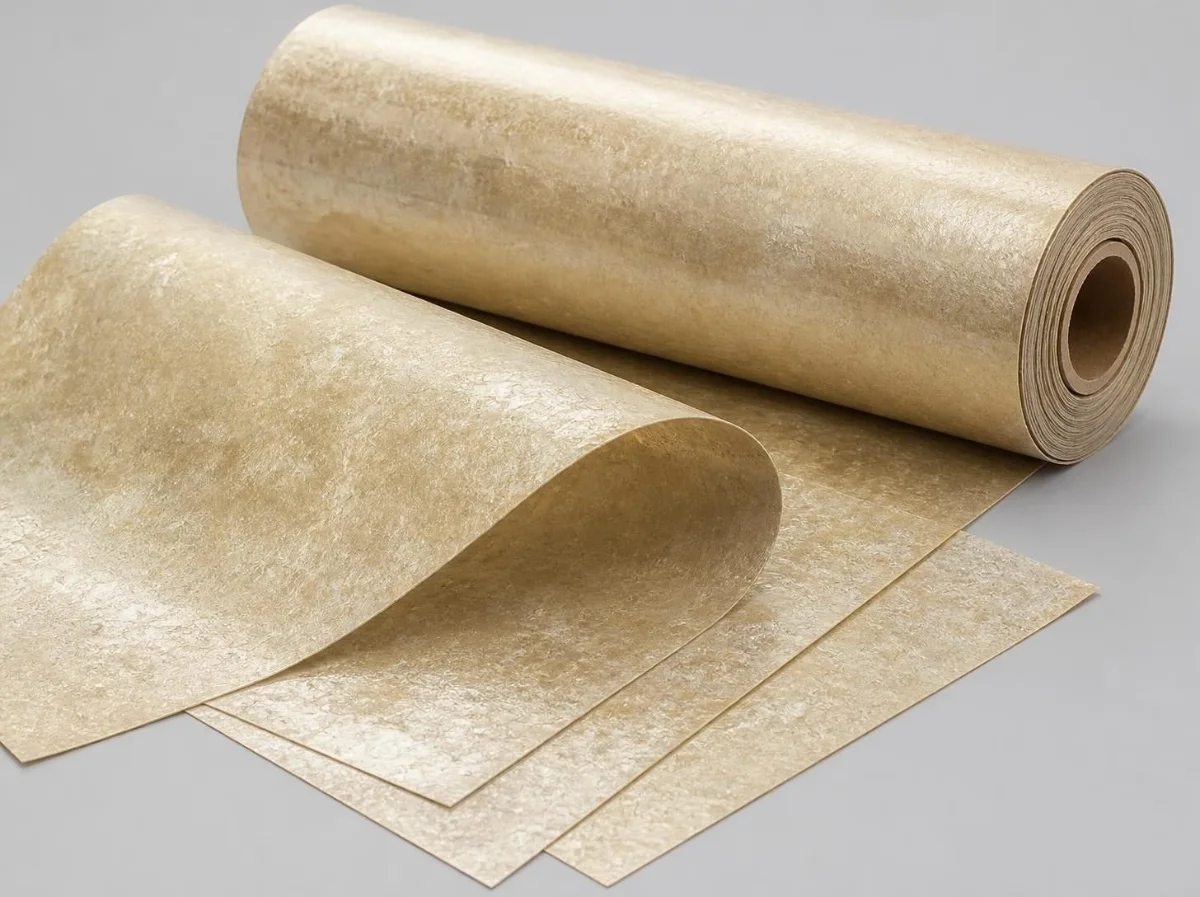
| Form | Grades | Thickness / size | Typical use | Product page |
|---|---|---|---|---|
| Rigid mica board / mica sheet | WMB-M550 · P800 · S1100 | 1–50 mm; 1000×1200 / 1000×2400 mm | Arc barriers, busbar supports, furnace panels, machined parts | Rigid mica board |
| Heater mica plate | WMH-M550 · P800 · S1100 | 0.15–1.5 mm; up to 1000×2400 mm | Heating elements, irons, toasters, air heaters | Mica heater plate |
| Flexible mica sheet | WMF-M500 · P600 | 0.15–5 mm; 1000×600 / 1000×1200 mm | Motor slot liners, coil wraps, transformers, breakers | Flexible mica sheet |
| Mica roll | WMR-GMG · GMP · GM · PM · CM | 0.2–5 mm rolls or cut sheet | Slip plane between crucible and coil in induction furnaces | Mica roll |
| Mica tubes and bushes | WMT-M550 · P800 · S1100 · N130 | ID from 8 mm; length to 1000 mm | Bolt, stud and terminal insulation in motors, furnaces, resistors | Mica tubes & bushes |
| Mica gasket sheet | WMG-P · WMG-PSS | Up to 3 mm | Exhaust, burner, turbine and heat-exchanger flanges | Mica gasket sheet |
| Natural muscovite mica | WMN-BLK · STR · DSC · FAB · GGS · TRW | Blocks, strips, discs, shields to size | Gauge-glass shields, capacitors, transistor washers | Natural muscovite mica |
| Machined mica parts | WMX-[grade]-[drawing] | To DXF / DWG / PDF drawing | Washers, rings, bushes, slotted coil supports, terminal plates | Machined mica parts |
Where mica insulation is used
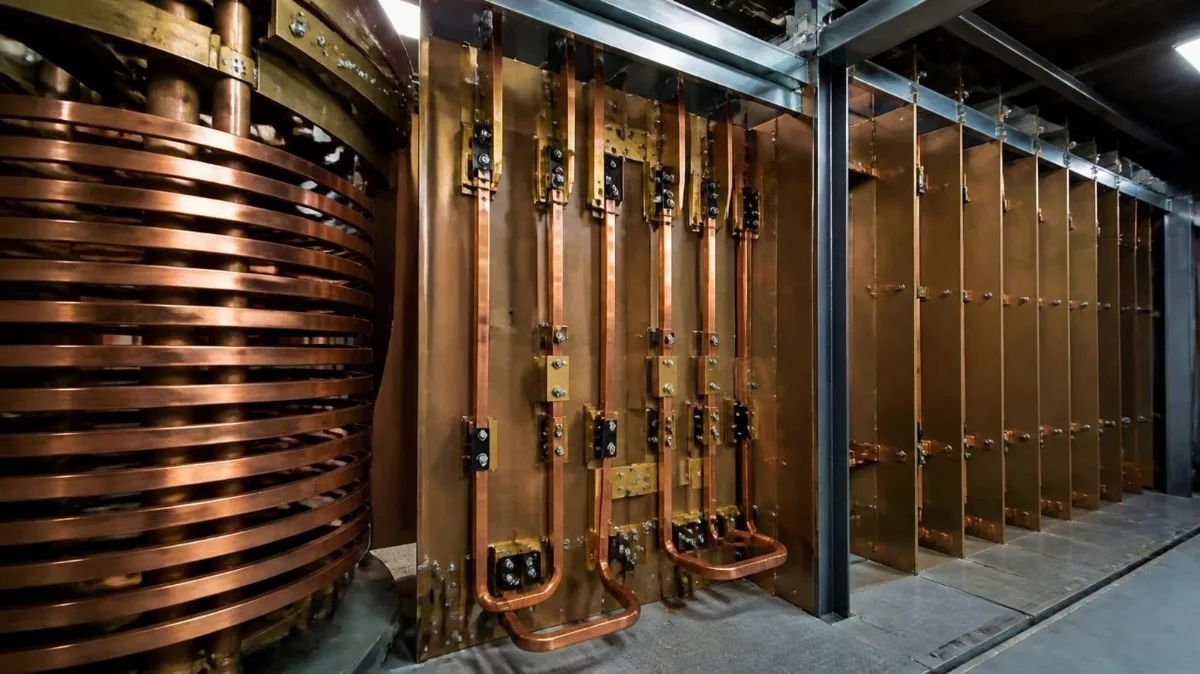
Switchgear and circuit breakers
Arc chutes, arc splitter plates, phase barriers and busbar supports see short bursts of arc plasma at several thousand degrees. Muscovite board (WMB-M550) gives the best combination of mechanical strength and 420 s arc resistance; synthetic board (WMB-S1100) is used where the arc duty is most severe.
Induction furnaces
Phlogopite board (WMB-P800) forms the coil supports, spacers and top and bottom panels, phlogopite tubes (WMT-P800) insulate the coil clamp bolts, and a glass- or ceramic-backed mica roll lines the coil as a slip plane. The roll protects the coil from refractory expansion, blocks leakage currents and makes the crucible easier to push out at relining.
Electric arc and ladle furnaces, smelting
Electrode clamp, mast arm, roof-lift and bus tube insulation on EAF and LF units, and busbar, anode clamp and cradle insulation in smelting pots and cells, are machined from WMB-P800 or WMB-S1100 board.
Heating elements and appliances
Thin heater mica plates carry the resistance wire in irons, hair dryers, toasters, kettles, ovens, air heaters and cylindrical resistance heaters. Grade follows element temperature: M550 below 550 °C, P800 below 800 °C, S1100 below 1100 °C.
Motors, transformers and coils
Flexible mica sheet wraps coils and lines slots in motors, generators and transformers, and mica tubes insulate studs and terminals. Mica tapes (glass, muscovite, phlogopite and synthetic) are used for fire-resistant cable and coil insulation.
High-temperature sealing
Phlogopite mica gasket sheet, plain or stainless-steel reinforced, seals exhaust, automotive, burner, turbine and heat-exchanger flanges that run too hot for rubber, fibre or graphite gaskets.
Boilers, batteries and electronics
Natural muscovite shields protect boiler water-level gauge glasses, thin splittings go into capacitors, and die-cut mica plates act as thermal runaway barriers between cells in EV and BESS battery packs.
Mica insulation vs the alternatives
| Property | Mica board (WMB) | G10 / FR4 glass-epoxy | Ceramic fibre board | Calcium silicate board |
|---|---|---|---|---|
| Continuous temperature | 550 / 800 / 1100 °C | about 130 °C | up to 1260 °C | 650–1100 °C |
| Dielectric strength (min.) | 19.7–23.6 kV/mm | 19.7–21.7 kV/mm | Low — not an electrical insulator | Low — not an electrical insulator |
| Arc resistance (min.) | 420–500 s | 120–130 s | — | — |
| Flammability | UL 94 V-0 | HB (G10) / V-1 (FR4) | Non-combustible | Non-combustible |
| Machinable to drawing | Yes, CNC | Yes | Limited | Yes |
| Best for | Heat + voltage + arcing together | Ambient-temperature panel parts | Furnace thermal lining | Structural fire and heat insulation |
The rule of thumb: use glass-epoxy where the part stays below 130 °C and never sees an arc; use ceramic fibre or calcium silicate where you need thermal insulation but not electrical insulation; use mica where the part must insulate electrically and survive heat, arcing or molten-metal radiation. For thin, very low thermal conductivity layers next to an electrical barrier, aerogel is often paired with mica in battery packs.
How to cut, machine and install mica insulation
- Saw, CNC route, drill, mill, turn and tap rigid board with carbide tooling; use sharp tools and moderate feed to avoid edge delamination, and back the sheet with a sacrificial board when drilling.
- Cut flexible sheet and heater plate with shears or a knife, or have parts stamped to drawing.
- Machine under local dust extraction and wear an FFP2 / P2 mask, safety glasses and gloves — natural mica can carry traces of crystalline silica.
- Ventilate during the first heat-up above about 300 °C, when a little binder burns off as light smoke.
- Store sheets flat, indoors and dry, in the original packing, away from heavy point loads; shelf life is unlimited when stored this way.
For production quantities, order machined mica parts finished to drawing so your line never handles raw sheet or mica dust.
Mica insulation price and how to order (2027)
Mica insulation is priced by mica type, thickness, sheet size or drawing and quantity, so Wedge Industries Limited quotes each enquiry in ₹ INR and $ USD rather than publishing a list price. Synthetic mica costs more than phlogopite, which costs more than muscovite; thin heater plates and flexible sheets are priced per sheet, rigid boards per sheet or per kg, and machined parts per piece against the drawing.
Order by SKU — family-grade-thickness (mm)-size, with size codes 1006 = 1000×600, 1012 = 1000×1200, 1024 = 1000×2400 mm and CUT = cut to drawing. Example: WMB-P800-10-1012 is a 10 mm phlogopite rigid board, 1000 × 1200 mm. MOQ and lead time are confirmed with each quotation, sample pieces are available for approval before bulk orders, and export orders ship flat-packed on pallets or in wooden cases to 45+ countries.
Get PriceDownload the WedgeMICA catalogue (PDF)
Mica insulation FAQs
What is mica insulation used for?
Mica insulation is used wherever heat and voltage meet: arc chutes, phase barriers and busbar supports in switchgear; coil supports, spacers and slip planes in induction furnaces; electrode clamp and mast-arm insulation on electric arc furnaces; heating element plates in appliances and industrial heaters; slot liners and coil wraps in motors and transformers; and high-temperature gaskets on exhausts, burners and turbines.
What temperature can mica insulation withstand?
It depends on the mica type and binder. WedgeMICA silicone-bonded rigid boards have continuous temperature indices of 550 °C for muscovite, 800 °C for phlogopite and 1100 °C for synthetic mica. Flexible mica sheets are rated to 500 °C (muscovite) and 600 °C (phlogopite). Shellac-bonded natural mica tubes are limited to about 130 °C. Natural muscovite mineral starts to lose bound water at roughly 700 to 800 °C and phlogopite at 900 to 1000 °C.
Is mica a good electrical insulator?
Yes. Thin natural muscovite sheet has a dielectric strength of 40 to 80 kV/mm and volume resistivity up to 10^17 ohm cm. Pressed mica laminates keep a minimum dielectric strength of 19.7 to 23.6 kV/mm by grade with arc resistance of 420 to 500 seconds, which is why mica is chosen for arc barriers rather than glass-epoxy laminates.
What is the difference between mica sheet and mica board?
Both terms describe the same silicone-bonded mica laminate. In practice, thin material from 0.15 to 1.5 mm is called mica sheet or heater plate, and thicker rigid material from 1 to 50 mm is called mica board or micanite plate. Flexible mica sheet is a separate product that stays pliable for wrapping coils.
Is mica insulation safe to handle?
Mica laminates are inert in normal handling and are not classified as hazardous under CLP in the form supplied. Cutting, drilling or routing produces mica dust, so use local extraction, an FFP2 or P2 mask, safety glasses and gloves. On first heating above about 300 °C a small amount of binder can burn off with light smoke, so ventilate during first heat-up.
How do I buy mica insulation from Wedge Industries Limited?
Order by Wedge SKU in the form family-grade-thickness-size, for example WMB-P800-10-1012 for a 10 mm phlogopite rigid board of 1000 × 1200 mm, or send a DXF, DWG or PDF drawing for machined parts. A Technical Data Sheet comes with every quotation and a Material Test Certificate with every delivery. Prices are quoted in INR and USD; call or WhatsApp +91 97175 06848.
Related mica insulation products
- Electrical insulation — materials, ratings and the full Wedge product range (2027 guide)
- Mica insulation — full WedgeMICA range and selection guide
- Rigid mica board / mica sheet (550 / 800 / 1100 °C)
- Mica heater plates · Flexible mica sheet · Mica roll for induction furnace
- Mica tubes & bushes · Mica gasket sheet · Natural ruby muscovite mica · Machined mica parts
- Wet ground mica powder · High-temperature insulation · Aerogel for BESS
Request a quotation for mica insulation
Send the Wedge SKU or grade, thickness, size or drawing, quantity and any MTC or dielectric test requirement. Wedge Industries Limited returns a Technical Data Sheet, a sample on request and a firm price in ₹ INR and $ USD.

Written by
Aishwar Bhatt
Techno-Commercial Consultant at Wedge India
Aishwar Bhatt is a Techno-Commercial Consultant at Wedge India (Wedge Industries Limited). He advises engineers, contractors and procurement teams on insulation, passive fire protection and building materials — from product selection and specifications to pricing and supply.
Connect on LinkedIn